

vocalizing, say %50 the normal rate of dialogue,
would allow them to prattle on illucidating what theyre fixating on
allows for more sense of what expressions are projected out
and the angle and degree of awareness
bobbling about like chipped crystal lampshades up hung with springs
speak less, know more...i.e. esoteric
my mind begins to hum...
-
the fire elf

- Posts: 7300
- Joined: Fri Jul 30, 2004 10:43 pm
- Burning Since: 2002
- Location: nation

...

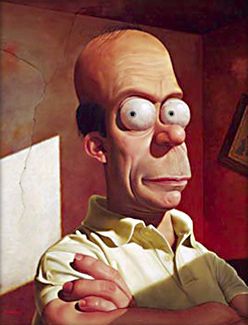
In contemporary usage, a parody (or lampoon) is a work that imitates
another work in order to ridicule, ironically comment on, or poke some
affectionate fun at the work itself, the subject of the work, the author or
fictional voice of the parody, or another subject. As literary theorist Linda
Hutcheon puts it, "parody...is imitation with a critical difference, not
always at the expense of the parodied text." Another critic, Simon
Dentith, defines parody as "any cultural practice which provides a
relatively polemical allusive imitation of another cultural production or
practice."
did you factor in the lemming quotient?
Like many rodents' teeth, their incisors grow continuously, allowing them
to exist on much tougher forage than would otherwise be possible.
Lemmings do not hibernate through the harsh northern winter. They
remain active, finding food by burrowing through the snow and utilising
grasses clipped and stored in advance.
The behavior of lemmings is much the same as that of many other
rodents which have periodic population booms and then disperse in all
directions, seeking the food and shelter that their natural habitat cannot
provide.
It is unknown why lemming populations en mass fluctuate, roughly every
four years, before plummiting almost to extinction.
___ is one of the largest media and entertainment corporations in theWhile many people believe that lemmings commit mass suicide when they
migrate, this is not actually the case. Lemmings will often migrate in large
groups and as a result some lemmings will occasionally be pushed off
cliffs or drowned in bodies of water simply by the press of their
compatriots, or by the dimension of the body of water. The myth of
lemming mass suicide is long-standing and has been popularized by a
number of factors. It is usually stated that the main source of the belief in
the suicide myth was propagated by ___
documentary White Wilderness which includes footage of lemmings
running head-long over a ledge. The filmmakers contrived this scene by
forcing a number of lemmings off a cliff.
world. Founded on October 16, 1923
-
the fire elf
- Posts: 7300
- Joined: Fri Jul 30, 2004 10:43 pm
- Burning Since: 2002
- Location: nation

-
the fire elf
- Posts: 7300
- Joined: Fri Jul 30, 2004 10:43 pm
- Burning Since: 2002
- Location: nation
-
the fire elf
- Posts: 7300
- Joined: Fri Jul 30, 2004 10:43 pm
- Burning Since: 2002
- Location: nation


-
third person perspective
- Posts: 92
- Joined: Fri Jun 22, 2007 3:06 pm
- Location: over there
...
The myth of lemming mass suicide is long-standing and has been popularized by a number of factors.


Order Rodentia
Superfamily Muroidea
Family Cricetidae
Subfamily Arvicolinae
Tribe Lemmini
Dicrostonyx
St Lawrence Island Collared Lemming (Dicrostonyx exsul)
Northern Collared Lemming (Dicrostonyx groenlandicus)
Ungava Collared Lemming (Dicrostonyx hudsonius)
Victoria Collared Lemming (Dicrostonyx kilangmiutak)
Nelson's Collared Lemming (Dicrostonyx nelsoni)
Ogilvie Mountain Collared Lemming (Dicrostonyx nunatakensis)
Richardson's Collared Lemming (Dicrostonyx richardsoni)
Bering Collared Lemming (Dicrostonyx rubricatus)
Arctic Lemming (Dicrostonyx torquatus)
Unalaska Collared Lemming (Dicrostonyx unalascensis)
Wrangel Lemming (Dicrostonyx vinogradovi)
Lemmus
Amur Lemming (Lemmus amurensis)
Norway Lemming (Lemmus lemmus)
Siberian Brown Lemming (Lemmus sibiricus)
North American Brown Lemming (Lemmus trimucronatus)
Myopus
Wood Lemming (Myopus schisticolor)
Synaptomys
Northern Bog Lemming (Synaptomys borealis)
Southern Bog Lemming (Synaptomys cooperi)
Tribe Ellobiini: mole voles, 5 species
Tribe Microtini: voles, 121 species
Eolagurus
Yellow Steppe Lemming (Eolagurus luteus)
Przewalski's Steppe Lemming (Eolagurus przewalskii)
Lagurus
Steppe Lemming (Lagurus lagurus)
118 other species known as voles or muskrats


-
the fire elf
- Posts: 7300
- Joined: Fri Jul 30, 2004 10:43 pm
- Burning Since: 2002
- Location: nation
...
http://en.wikipedia.org/wiki/Charleston ... h_Carolina
http://en.wikipedia.org/wiki/Los_angeles
http://en.wikipedia.org/wiki/Tulsa
intertwining dharma
http://en.wikipedia.org/wiki/Los_angeles
http://en.wikipedia.org/wiki/Tulsa
intertwining dharma
instantiate vacuous truth


-
the fire elf
- Posts: 7300
- Joined: Fri Jul 30, 2004 10:43 pm
- Burning Since: 2002
- Location: nation
...

echos through popular culture:
Nintendo Power magazine devoted an entire article to R.O.B. in its 10th
anniversary issue. With tongue in cheek, they related that, in 1985, he
had been stricken with wanderlust, resigned from the company, and went
off to explore the world. In the intervening years he had gone to
Antarctica, attended the Berlin Wall's destruction, acted as the T-1000's
stunt double in Terminator 2: Judgment Day, worked for NASA, and
became the first robot on the moon (the mission was top-secret, of
course). By 1995, he had moved to the Midwest, married, settled down,
and started a family.
In the style of "Where Are They Now?", X-Play humorously described
R.O.B's descent into a world of robot sex and drug addiction after being
ignored by the gaming public. In a later episode, R.O.B was a villain
called "Memory Card" and was a parody of Billy the Jigsaw Puppet from
the Saw film trilogy.
In GameSpy's Top 25 Smartest Moves in Gaming History, Nintendo's
decision to use R.O.B. as a "trojan horse" to convince retailers to stock
the NES was chosen as the #5 smartest move.
As an April Fools' gag in 2005, IGN claimed that a 1/4 scale R.O.B., with a
Game Boy Advance version of Gyromite, would be coming out in the NES
Classics Series. In the article was a black-and-white product image from
a fictional newspaper.
In the January 2006 issue of Wired, R.O.B. placed at 45 in the list of "50
Best Bots Ever".
In Grand Theft Auto Vice City Stories for the Playstation Portable (PSP)
the so called "Domestobot" is akin to a R.O.B.
In the webcomic VG Cats R.O.B. appears as a doctor for the ailing
Nintendo GameCube in the strip "Operating Buddy" but fails to save
GameCube's life due to his slow maneuvering.
IGN's weekly gaming podcast features a "R.O.B. the Robot" question &
answer session called "R.O.B. The Robot In Your Kitchen." In this feature,
R.O.B. is actually voiced by co-presenter Hilary Goldstein (using a
vocoder effect to make his voice sound robotic), and portrayed as a
washed up gaming icon.

-
the fire elf
- Posts: 7300
- Joined: Fri Jul 30, 2004 10:43 pm
- Burning Since: 2002
- Location: nation
-
the fire elf
- Posts: 7300
- Joined: Fri Jul 30, 2004 10:43 pm
- Burning Since: 2002
- Location: nation
...
Seed To A Tree

As i shit, i sit and wonder why
My floor is so cold and my back broken tired
But life is good, even though it won't be long
With a candle comes emotions that
Dance with the shadows on my wall
What were you thoughts, as they
Were flying through your mind
Compared to what you feel from
The bars your now behind
If they could speak, what do you think
They would say to you?
I do believe you'd been better
Off if you'd just told the truth
Never had a problem till i stood face to face with me
And i wish there was a way for me to go inside so i could see
All the faces of the people who have torn a piece of me
As i grew from a seed to a tree
Can you feel the power of the eye
That's hidden away 5 feet from where we lie
What do you taste, when you take a drink of me
Is it to much for me to ask if i asked you to leave
Please just leave 'cause i want to be alone
There's a fine line between love and my feelings for you
High time i washed it all away
Unkind, i watch your future burn before you
Denied, a chance of any love in your life
And i ask you one time..why?
As i shit, i sit and wonder why
My floor is so cold and my back broken tired
But life is good, even though it won't be long
With a candle comes emotions that
Dance with the shadows on my wall
What were you thoughts, as they
Were flying through your mind
Compared to what you feel from
The bars your now behind
If they could speak, what do you think
They would say to you?
I do believe you'd been better
Off if you'd just told the truth
Never had a problem till i stood face to face with me
And i wish there was a way for me to go inside so i could see
All the faces of the people who have torn a piece of me
As i grew from a seed to a tree
Can you feel the power of the eye
That's hidden away 5 feet from where we lie
What do you taste, when you take a drink of me
Is it to much for me to ask if i asked you to leave
Please just leave 'cause i want to be alone
There's a fine line between love and my feelings for you
High time i washed it all away
Unkind, i watch your future burn before you
Denied, a chance of any love in your life
And i ask you one time..why?
instantiate vacuous truth
-
the fire elf
- Posts: 7300
- Joined: Fri Jul 30, 2004 10:43 pm
- Burning Since: 2002
- Location: nation
...
courtesy blind melon
-
the fire elf
- Posts: 7300
- Joined: Fri Jul 30, 2004 10:43 pm
- Burning Since: 2002
- Location: nation
of spirits and crossings
portals are not found just everywhere or anytime...
they we're acting like hellions...
so i loosed eastcoast demons
and balanced it with a wisdom teaching
some incidents are influenced
by an ancient intelligence
pay attention
they we're acting like hellions...
so i loosed eastcoast demons
and balanced it with a wisdom teaching
some incidents are influenced
by an ancient intelligence
pay attention
instantiate vacuous truth
...
http://www.makethestand.com/ftopict-206.html
look who they are on the web via their manner of discourse
look who they are on the web via their manner of discourse
-
the fire elf
- Posts: 7300
- Joined: Fri Jul 30, 2004 10:43 pm
- Burning Since: 2002
- Location: nation

-
the fire elf
- Posts: 7300
- Joined: Fri Jul 30, 2004 10:43 pm
- Burning Since: 2002
- Location: nation
Re: ...
there's a cleft of understandingmayavin wrote:their manner of discourse
a bottleneck
strung between wires
but even glimmers of light help the balance
...
takesanothertry wrote:any time you notice a thought
is the appropriate time
to redirect awareness
watching through the mind, towards the universe
why place thoughts in your way at all?
if closed eye & open eye are merely application of function
the whole day should seem available
imagine if they'd only worked on the pyramids a couple hours a day...
that said,
deeper states,
myself,
i use intentionally
as an alternative response to circumstance
...
for the mystically minded,
the angle you enter a deep trance cannot be discounted...
rebounding off circumstantial energies, i have found,
creates a greater tendency for the aspects within
to interact with the circumstantial
the angle you enter a deep trance cannot be discounted...
rebounding off circumstantial energies, i have found,
creates a greater tendency for the aspects within
to interact with the circumstantial
sphera spinning circa gradually midst photon shaft grazing electron soo flit while neutron's gazing
-
the fire elf
- Posts: 7300
- Joined: Fri Jul 30, 2004 10:43 pm
- Burning Since: 2002
- Location: nation


-
the fire elf
- Posts: 7300
- Joined: Fri Jul 30, 2004 10:43 pm
- Burning Since: 2002
- Location: nation
...
cyberhorsemessenger
carried across...
different decor, prepackaged crescendo...
yet not without worth...
carried across...
different decor, prepackaged crescendo...
yet not without worth...
...
masks...acts and scenes...
yet...and yet...
either road, there's no warm fuzzy...
but for the notion behind it all...
that by mind does one lift oneself up.
i'll concede them their lucidity,
even if my moods will have none of it
visions in my head allow my hand to do no less
yet...and yet...
either road, there's no warm fuzzy...
but for the notion behind it all...
that by mind does one lift oneself up.
i'll concede them their lucidity,
even if my moods will have none of it
visions in my head allow my hand to do no less
-
the fire elf
- Posts: 7300
- Joined: Fri Jul 30, 2004 10:43 pm
- Burning Since: 2002
- Location: nation
...
then of carving of wood...
and stains and burning
sandpaper smooth...
why pay the overhead of office and home
when i could merchant venice
with a backpack
and stains and burning
sandpaper smooth...
why pay the overhead of office and home
when i could merchant venice
with a backpack
instantiate vacuous truth
...
Psychology:create social environments that are unmediated by commercial
sponsorships, transactions, or advertising.
an interaction of an individual with one or more other persons, esp. as
influenced by their assumed relational roles of parent, child, or adult.
Communication involving two or more people that affects all those
involved; personal interaction
[Origin: 1575–85; < L trÄ
sphera spinning circa gradually midst photon shaft grazing electron soo flit while neutron's gazing
-
the fire elf
- Posts: 7300
- Joined: Fri Jul 30, 2004 10:43 pm
- Burning Since: 2002
- Location: nation
...
note to self:
3dimensional marble sculpture on a rectangular base inscribed with words
3dimensional marble sculpture on a rectangular base inscribed with words
-
the fire elf
- Posts: 7300
- Joined: Fri Jul 30, 2004 10:43 pm
- Burning Since: 2002
- Location: nation
...
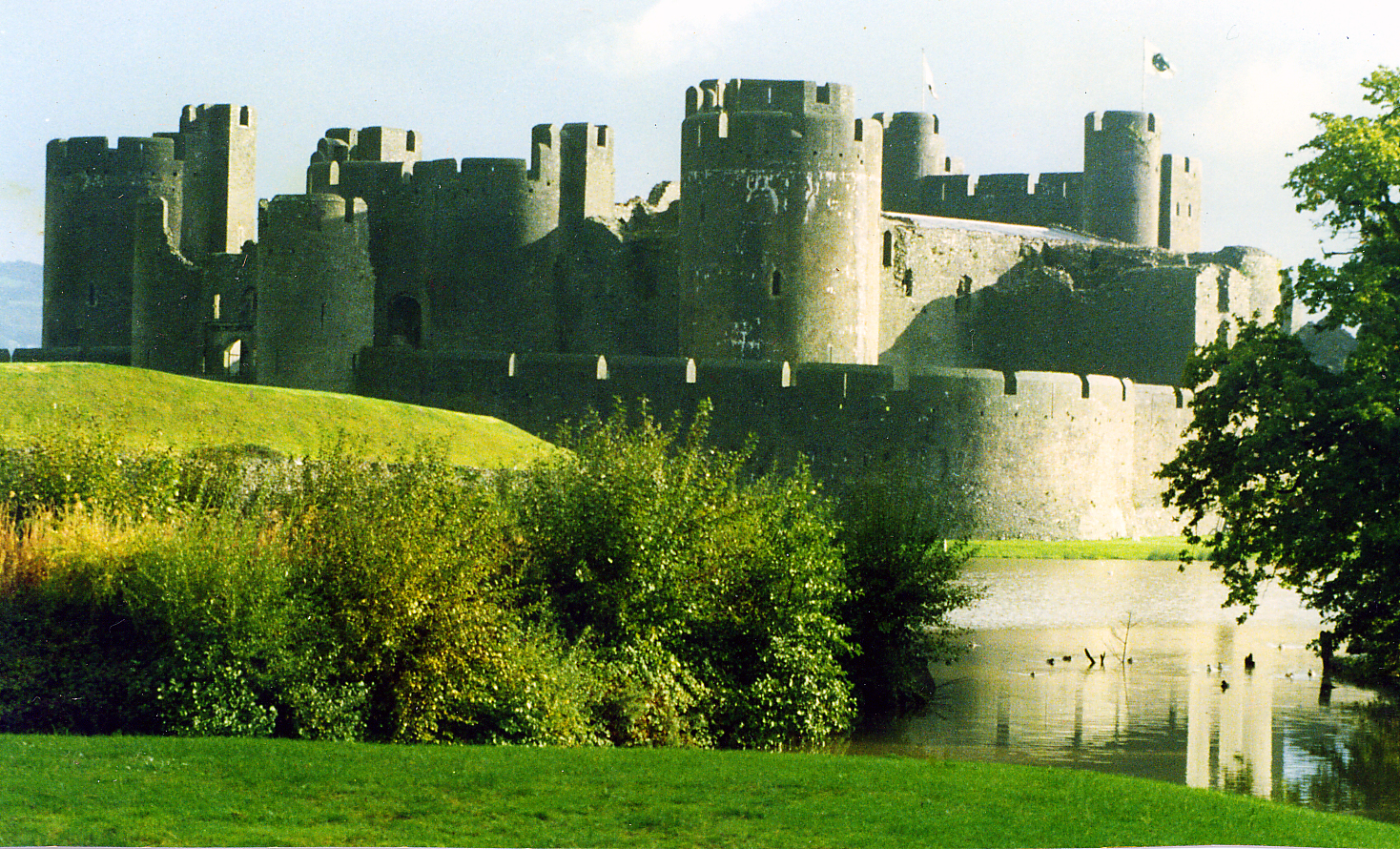
possible artisan careers...

Traditionally medieval stonemasons served a seven year apprenticeship.
A similar system still operates in some countries, such as Germany.
In other countries, such as the United Kingdom, Canada, and the United
States, there is a less formal structure. One can simply learn the trade by
observing others while working under those who have already mastered
the trade. In some areas colleges offer courses which teach not only the
manual skills but also related fields such as drafting and blueprint reading
or construction conservationism. There also exist some government
regulated apprenticeship programs which vary in length and combine on-
the-job learning with classroom sessions. Electronic Stonemasonry
training resources enhance traditional delivery techniques.
Those wishing to become stonemasons should have little problem working
at heights, possess reasonable hand-eye co-ordination, be moderately
physical fit, and have basic mathematical ability. Most of these things can
be developed while learning.
http://en.wikipedia.org/wiki/Stonemason
Traditionally medieval stonemasons served a seven year apprenticeship.
A similar system still operates in some countries, such as Germany.
In other countries, such as the United Kingdom, Canada, and the United
States, there is a less formal structure. One can simply learn the trade by
observing others while working under those who have already mastered
the trade. In some areas colleges offer courses which teach not only the
manual skills but also related fields such as drafting and blueprint reading
or construction conservationism. There also exist some government
regulated apprenticeship programs which vary in length and combine on-
the-job learning with classroom sessions. Electronic Stonemasonry
training resources enhance traditional delivery techniques.
Those wishing to become stonemasons should have little problem working
at heights, possess reasonable hand-eye co-ordination, be moderately
physical fit, and have basic mathematical ability. Most of these things can
be developed while learning.
http://en.wikipedia.org/wiki/Stonemason
instantiate vacuous truth
-
the fire elf
- Posts: 7300
- Joined: Fri Jul 30, 2004 10:43 pm
- Burning Since: 2002
- Location: nation
-
the fire elf
- Posts: 7300
- Joined: Fri Jul 30, 2004 10:43 pm
- Burning Since: 2002
- Location: nation
...
Perhaps the greatest influence on western art in the last five centuries,
Michelangelo was an Italian sculptor, architect, painter and poet in the
period known as the High Renaissance. His great works were almost
entirely in the service of the Catholic Church
The man himself has been assimilated to this image and represented as
the archetype of the brooding, irascible, lonely and tragic figure of the
artist. This popular view is drastically oversimplified, except in one
respect: the power and originality of his art have guaranteed his
prominence as a historical figure for over 400 years since his death, even
among those who have not liked the example he gave.
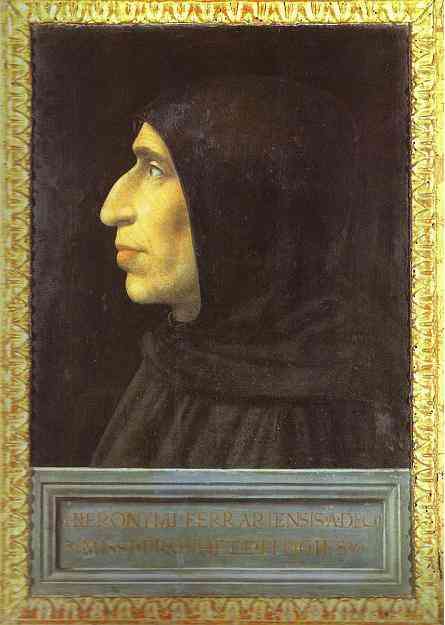
Girolamo Savonarola (September 21, 1452 – May 23, 1498), also
translated as Jerome Savonarola or Hieronymus Savonarola, was an
Italian Dominican priest and leader of Florence from 1494 until his
execution in 1498. He was known for religious reformation, anti-
Renaissance preaching, book burning, and destruction of art.

In his youth he studied the Bible, Aquinas, and Aristotle. Savonarola
initially studied at the University of Ferrara, where he appears to have
taken an advanced Arts degree. His anti-clerical stance was initially
manifested in his poem on the destruction of the world entitled De Ruina
Mundi (On the Downfall of the World), written at the age of 20. It was at
this stage that he also began to develop his moral voice, and in 1475 his
poem De Ruina Ecclesiae (On the Downfall of the Church) displayed his
contempt of the Roman Curia by terming it 'a false, proud whore'.
Michelangelo was an Italian sculptor, architect, painter and poet in the
period known as the High Renaissance. His great works were almost
entirely in the service of the Catholic Church
The man himself has been assimilated to this image and represented as
the archetype of the brooding, irascible, lonely and tragic figure of the
artist. This popular view is drastically oversimplified, except in one
respect: the power and originality of his art have guaranteed his
prominence as a historical figure for over 400 years since his death, even
among those who have not liked the example he gave.
http://www.answers.com/topic/michelangeloAfter grammar school, Michelangelo was apprenticed at the age of
13 to Domenico Ghirlandaio, the most fashionable painter in Florence.
That this should have happened is surprising, and no satisfactory
explanation has been proposed. Michelangelo's implication in his old age
that he had to overcome his family's opposition is likely to be mythical in
part. In any case, after a year his apprenticeship was broken off, and an
even odder arrangement followed: the boy was given access to the
collection of ancient Roman sculpture of the ruler of Florence, Lorenzo de'
Medici, dined with the family, and was looked after by the retired sculptor
who was in charge of the collection. This arrangement was quite
unprecedented at the time.
Michelangelo's earliest sculpture, a stone relief executed when he was
about 17, in its composition echoes the Roman sarcophagi of the Medici
collection and in its subject, the Battle of the Centaurs, a Latin poem a court poet read to him. Compared to the sarcophagi, Michelangelo's work
is remarkable for the simple, solid forms and squarish proportions of the
figures, which add intensity to their violent interaction.
Soon after Lorenzo died in 1492, the Medici fell from power and
Michelangelo fled the city. In Bologna in 1494 he obtained a small but
distinguished commission to carve the three saints needed to complete
the elaborate tomb of St. Dominic in the church of S. Domenico. They too
show dense forms, which contrast with the linear forms, either decorative
or realistic, then dominant in sculpture, but are congruent with the work of
Nicola Pisano, who had begun the tomb about 1265. On returning home
Michelangelo found Florence dominated by the famous ascetic monk
Savonarola. Michelangelo was in contact with the junior branch of the
Medici family, and he carved a Cupid (lost) which he took to Rome to sell,
palming it off as an ancient work.
Rome, 1496-1501
In Rome, Michelangelo next executed a Bacchus for the garden of ancient
sculpture of a banker. This, Michelangelo's earliest surviving large-scale
work, shows the god teetering, either drunk or dancing. It is his only
sculpture meant to be viewed from all sides; all the others, generally set
in front of walls, possess to some extent the visual character of reliefs.
In 1498, through the same banker, came Michelangelo's first important
commission: the Pietà now in St. Peter's. The term pietà refers to a type
of image in which Mary supports the dead Christ across her knees;
Michelangelo's version is today the most famous one. In both the PietÃ
and the Bacchus the effects of hard polished marble and of curved
yielding flesh coexist. Over life size, the Pietà has mutually reinforcing
contrasts: vertical and horizontal, cloth and skin, allude to the living and
the dead, female and male, but the unity of the pyramidal composition is
strongly imposed.
Florence, 1501-1505
On his return to Florence in 1501 Michelangelo was recognized as the
most talented sculptor of central Italy, but his work was still in the early
Renaissance tradition, as is the marble David, commissioned in 1501 for
Florence Cathedral but when finished, in 1504, more suitably installed in
front of the Palazzo Vecchio. (The original is now in the Accademia; the
statue at the original site is a copy.) It shares the clear and strong but
bland presence of the Pietà . Before he finished the David, Michelangelo's
style had begun to change, as indicated by his drawing of a very different
bronze David (lost) and by other works, particularly the Battle of Cascina.
All these works resulted from the city fathers' desire to revive
monumental public art, characteristic of the period before the Medici early
in the 15th century. The new Council Hall of the Palazzo Vecchio was to
have patriotic murals that would also show the special skills of Florence's
leading artists: Leonardo da Vinci and Michelangelo.
Michelangelo's Battle of Cascina was commissioned in 1504; several
sketches and a copy of the cartoon exist. The central scene shows a
group of muscular nudes, soldiers climbing from a river where they had
been swimming, to answer a military alarm. Inevitably Michelangelo felt
the influence of Leonardo and his evocation of continuous flowing motion
through living forms. Michelangelo's greatness lay partly in his ability to
absorb Leonardo's innovations and yet not reduce the heavy solidity and
impressive dignity of his earlier work. This fusion of throbbing life with
colossal grandeur henceforth was the special quality of Michelangelo's art.
From then on too Michelangelo's work consisted mainly of very large
projects that he never finished because of his inability to turn down the
vast commissions of his great clients which appealed to his preference for
the grand scale. Of the 12 Apostles he was to execute for Florence
Cathedral, he began only the St. Matthew; this was the first monumental
sculpture suggesting a Leonardesque agitation.
Tomb of Julius II
The project of the Apostles was put aside when Pope Julius II called
Michelangelo to Rome in 1505 to design his tomb, which was to include
about 40 life-size statues. This project occupied Michelangelo off and on
for the next 40 years. Of it he wrote, "I find I have lost all my youth
bound to this tomb." In 1506 a dispute over funds for the tomb led
Michelangelo, who had spent almost a year at the quarries in Carrara, to
flee to Florence. A reconciliation between Julius II and Michelangelo took
place in Bologna, which the Pope had just conquered, and Michelangelo
modeled a colossal bronze statue of Julius for S. Petronio in Bologna,
which he completed in 1508 (destroyed).
Sistine Chapel
In 1508 Julius commissioned Michelangelo to decorate the ceiling of the
chief Vatican chapel, the Sistine. This work was relatively modest at first,
and Michelangelo felt he was being pushed aside by rival claimants on
funds. But he soon was able to alter the traditional format of ceiling
painting, whereby only single figures could be represented, not scenes
calling for dramas in space; his introduction of dramatic scenes was so
successful that it set the standard for the future.
The elaborate program with hundreds of figures was arranged in an
original framing system that was Michelangelo's earliest architectonic
design. He approached the ceiling as a surface on which to attach planes
built up in various degrees of projection, like a relief sculpture except that
its basic units are blocks rather than malleable forms. The many planes
and painted architectural framework make the many categories of images
so easily readable that the framing system tends to pass unnoticed, but
its rich, heavy ornament is typical of the High Renaissance. The chief
figural elements of the program are the 12 male and female prophets (the
latter known as sibyls) and the nine stories from Genesis. Michelangelo
began painting at the end of the story, with the three Noah scenes and the
adjacent prophets and sibyls, and in 4 years worked through the three
Adam stories to the three Creation stories at the other end of the ceiling.
Michelangelo paused for some months halfway along, and when he
returned to the ceiling, he made the prophets more monumental (in
keeping with the fewer and hence bigger figures in the nearby Creation
scenes). At that point his style also underwent a shift. He had begun with
a manner reverting to his sculptural style in the Pietà and David, as if he
was uncertain when facing the unfamiliar task of painting on such a scale.
The first prophets are harmonious but static, as is the Flood scene. But
soon there develops a forceful grandeur, with a richer emotional tension
than in any previous work. This is well illustrated in the Ezekiel, whose
massive torso seems to be in tension with the centrifugally twisted head
and legs. The prophet peers questioningly into the unknown.
After the pause, Michelangelo began the second half of the ceiling with a
newly acquired subtlety of expression, as in the Creation of Adam. The
images become freer and more mobile in the last parts painted, such as
the Separation of Light and Darkness, but the mood remains introspective.
As soon as the ceiling was completed in 1512, Michelangelo returned to
the tomb of Julius and carved for it (1513-1514) the Moses (S. Pietro in
Vincoli, Rome) and two Slaves (Louvre, Paris), using the same types he
employed for the prophets and their attendants painted in the Sistine
ceiling. The Moses seems to represent a final synthesis of all those
variants, although it is more restrained owing to the sculptural medium. It
was meant to be placed above eye level, and some of its dramatic force
would probably have been mitigated when seen from the intended
distance. Julius's death in 1513 halted the work on his tomb.
From now on the successive popes determined Michelangelo's activity, as
they were all anxious to have work by the recognized greatest maker of
monuments for themselves, their families, and the Church. Pope Leo X,
son of Lorenzo de' Medici, proposed a marble facade for the family parish
church of S. Lorenzo in Florence, to be decorated with statues by
Michelangelo, but his project was canceled after four years of quarrying
and designing.
Medici Chapel
In 1520 Michelangelo was commissioned to execute a tomb chapel for two
young Medici dukes. The Medici Chapel (1520-1534), an annex to S.
Lorenzo, is the most nearly complete large sculptural project of
Michelangelo's career. The two tombs, each with an image of the
deceased and two allegorical figures, are placed against elaborately
articulated walls; these six statues and a seventh on a third wall, the
Madonna, are by Michelangelo's own hand. The two saints flanking the
Madonna are by assistants from his clay sketches. Four river gods were
planned but not executed.
The interior architecture of the Medici Chapel develops the treatment seen
in the painted architectural framework of the Sistine ceiling; the walls are
treated as relief sculptures, with intersecting moldings and pillars on many
planes, giving a loose freedom typical of a non-professional approach to
architecture. Whimsical reversals of what is proper - trapezoidal windows
and capitals smaller than their columns - introduce what is now called
mannerism in architecture.
The allegories on the curved lids of the tombs are also innovative: Day
and Night recline on one tomb, Morning and Evening on the other. The
choice of imagery was left to the artist, and these figures seem to
symbolize the endless round of time leading to death. Michelangelo said
that the death of the dukes cut off the light of the times of day, and such
courtly adulation, which is hard to accept as Michelangelesque, is also
suggested in the dukes' fancy costumes and idealized representations.
Political absolutism was growing at the time, and Michelangelo's statues
were often used as precedents in formulating new types of royal
portraiture. A similar style is seen in the sinuous Victory overcoming a
tough old warrior. This statue, Michelangelo's last serious contribution to
the tomb of Julius, also embodied the artist's interest in Neoplatonism, a
philosophy that urged man to rise above his body into the spiritual plane.
The architecture of the Medici Chapel has a fuller analog in the library, the
Biblioteca Laurenziana, built at the same time on the opposite side of S.
Lorenzo to house Leo X's books. The reading room has functional
suggestions in its window and pillar system and refined ornament on floor
and ceiling. But the entrance hall and staircase are Michelangelo's most
astonishing illustration of capricious paradox, with recessed columns
resting on scroll brackets set halfway up the wall and corners stretched
open rather than sealed.
His Poetry
Most of Michelangelo's 300 surviving poems were written in the 1530s and
1540s and fall into two groups. The earlier poems are on the theme of
Neoplatonic love and are full of logical contradictions and conceits, often
very intricate. They belong to an international trend best known in the
work of Luis de Góngora and John Donne and make an interesting parallel
to mannerist architecture. The later poems are Christian; their mood is
penitent; and they are written in a simple, direct style. These match a
phase of Michelangelo's plastic art that slightly precedes them.
"Last Judgment"
In 1534 Michelangelo left Florence for the last time, settling in Rome. The
next 10 years were mainly given over to painting for Pope Paul III, who is
best known for convening the Council of Trent and thus organizing the
Catholic Reformation.
The first project Michelangelo executed for Paul III is the huge Last
Judgment (1536-1541) on the end wall of the Sistine Chapel. It revives a
medieval approach to the same theme in using an entire end wall in an
undivided field and in the composition of the parts. The design functions
like a pair of scales, with some angels pushing the damned down to hell
on one side and some pulling up the saved on the other side, both
directed by Christ, who "conducts" with both arms; in the two top corners
are the cross and other symbols of the Passion, which serve as his
credentials to be judge.
The flow of movement in the Last Judgment is greater than in the
medieval tradition, with the two streams of figures tending to shear
against each other, but it is slower compared to Michelangelo's own
earlier work. The colors, blue and brown, are simple, as are the bodies.
The figure type is new, with thick, waistless torsos and loosely connected
limbs. The new sobriety seems to parallel the ideas of the Counter
Reformation, with whose leaders Michelangelo had intimate contact
through his admired mentor, the devout widow Vittoria Colonna, the
addressee of many of his poems.
Michelangelo's frescoes in the Pauline Chapel in the Vatican (1541-1545)
are similar to the Last Judgment, but here he added a remarkable
technical novelty by exploring perspective movement and coloristic
subtlety as major expressive components. He may have turned to these
typically painterly concerns because the Pauline frescoes were the first
ones he executed on a normal scale and eye level. The only sculpture of
these years, the Rachel and the Leah, executed so that a small amended
version of the tomb of Julius could at last be erected, are so neat and
unemphatic that they are often disregarded or not accepted as
Michelangelo's work.
Works after 1545
Michelangelo devoted himself almost entirely to architecture and poetry
after 1545. For Paul III he planned the rebuilding of the Capitol area, the
Piazza del Campidoglio, a pioneering scheme of city planning that gave
monumental articulation to an area traditionally used for civic ceremonies.
The geometry is dynamic, marked by a trapezoidal plan (determined by
the site) formed by three buildings and an oval pavement; the airy
breadth of the piazza produces a relatively gentle effect of a special
theatrical locus. The chief emphasis is on the facades of the two new side
buildings, executed to Michelangelo's plans after his death. Two-story
pilasters mark the front plane, unifying the open porch on the lower story
and the closed upper one, thus mingling suggestions of compressed
power and clear skeletal construction.
Michelangelo's approach to architecture was growing richer and more
three-dimensional, as in the Palazzo Farnese, which he completed after
the death of Antonio da Sangallo the Younger in 1546. In Michelangelo's
third story of the courtyard, a second row of wide pilasters set behind the
front level of narrow ones causes the wall of which they are all part to
suggest a wavy continuum.
Paul III appointed Michelangelo to take over the direction of the work at
St. Peter's after Sangallo died. Here Michelangelo had less respect for his
predecessor's plan, returning instead to the concepts that the first
architect, Donato Bramante, had proposed in 1506. The enormous church
was to be an equal-armed cross in plan, concentrated on a huge central
space beneath the dome surrounded by a series of secondary spaces and
their containing structures. The edge thus became a complex outline of
changing convex curves, and from that Michelangelo built the wall straight
up, producing a very active rhythm, all on such a monumental scale that
we can never see more than a fragment at one time. Its surface
alternates colossal pilasters with stacks of three vertical windows
compressed between them, providing a measure of the vast scale and
also binding the wall into vertical unity. By the time Michelangelo died, a
considerable part of St. Peter's had been built in the form in which we
know it, and the drum of the dome was finished up to the springing.
The essentially three-dimensional concept of St. Peter's, inherently
architectonic and original, gave way in Michelangelo's last years to a
gleaming, almost dematerialized approach to the wall, suggested in the
plans (ca. 1559) for the unexecuted church of S. Giovanni dei Fiorentini
and a city gate, the Porta Pia (begun 1561).
Michelangelo's sculpture after 1545 was limited to two Pietàs that he
executed for himself. The first one (1550-1555, unfinished), which is in
the Cathedral of Florence, was meant for his own tomb. This PietÃ
employs the body type of the Last Judgment in the Christ and its shearing
up and down thrusts in the interrelationships of the figures. His late
architectural style has a parallel in his last sculpture, the Rondanini PietÃ
in Milan, which is cut away to an almost abstract set of curves.
Michelangelo began this sculpture in 1555, and he was working on it on
Feb. 12, 1564. He died six days later in Rome and was buried in Florence.
Michelangelo's impact on the younger artists who encountered his
successive styles throughout his long life was immense, but it tended to
be crushing. The great baroque artists of the next century, such as Peter
Paul Rubens and Gian Lorenzo Bernini, were better able at a distance to
study his ideas without danger to their artistic autonomy.
Girolamo Savonarola (September 21, 1452 – May 23, 1498), also
translated as Jerome Savonarola or Hieronymus Savonarola, was an
Italian Dominican priest and leader of Florence from 1494 until his
execution in 1498. He was known for religious reformation, anti-
Renaissance preaching, book burning, and destruction of art.
In his youth he studied the Bible, Aquinas, and Aristotle. Savonarola
initially studied at the University of Ferrara, where he appears to have
taken an advanced Arts degree. His anti-clerical stance was initially
manifested in his poem on the destruction of the world entitled De Ruina
Mundi (On the Downfall of the World), written at the age of 20. It was at
this stage that he also began to develop his moral voice, and in 1475 his
poem De Ruina Ecclesiae (On the Downfall of the Church) displayed his
contempt of the Roman Curia by terming it 'a false, proud whore'.
-
the fire elf
- Posts: 7300
- Joined: Fri Jul 30, 2004 10:43 pm
- Burning Since: 2002
- Location: nation
...
Savonarola became a Dominican friar in 1475, during the Italian
Renaissance, and entered the convent of San Domenico in Bologna. He
immersed himself in theological study, and in 1479 transferred to the
convent of Santa Maria degli Angeli. Finally in 1482 the Order dispatched
him to Florence, the ‘city of his destiny’. Savonarola was lambasted for
being ungainly, as well as being a poor orator. He made no impression on
Florence in the 1480s, and his departure in 1487 went unnoticed. He
returned to Bologna where he became ‘master of studies’.
A plaque commemorates the site of Savonarola’s execution in the Piazza
della Signoria, Florence.
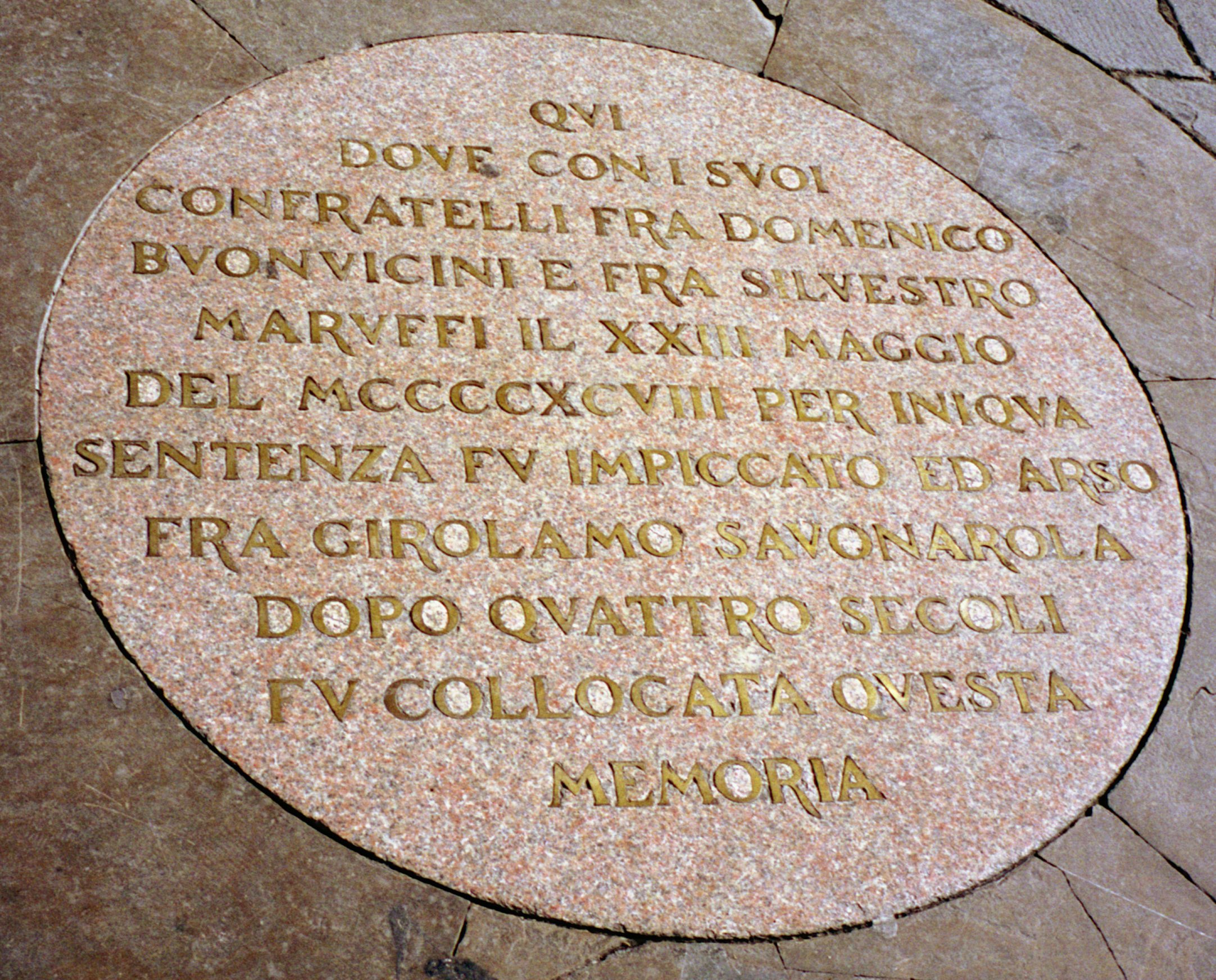
Renaissance, and entered the convent of San Domenico in Bologna. He
immersed himself in theological study, and in 1479 transferred to the
convent of Santa Maria degli Angeli. Finally in 1482 the Order dispatched
him to Florence, the ‘city of his destiny’. Savonarola was lambasted for
being ungainly, as well as being a poor orator. He made no impression on
Florence in the 1480s, and his departure in 1487 went unnoticed. He
returned to Bologna where he became ‘master of studies’.
A plaque commemorates the site of Savonarola’s execution in the Piazza
della Signoria, Florence.
-
the fire elf
- Posts: 7300
- Joined: Fri Jul 30, 2004 10:43 pm
- Burning Since: 2002
- Location: nation
...
Such fiery preachings were not uncommon at the time, but a series of
circumstances quickly brought Savonarola great success. The first
disaster to give credibility to Savonarola’s apocalyptic message was the
Medici’s family weakening grip on power due to French Italian wars. The
flowering of art and culture paid for by wealthy Italian families now
seemed to mock the growing misery in Italy, creating a backlash of
resentment among the people. The second disaster was the appearance
of syphilis (or the “French poxâ€
circumstances quickly brought Savonarola great success. The first
disaster to give credibility to Savonarola’s apocalyptic message was the
Medici’s family weakening grip on power due to French Italian wars. The
flowering of art and culture paid for by wealthy Italian families now
seemed to mock the growing misery in Italy, creating a backlash of
resentment among the people. The second disaster was the appearance
of syphilis (or the “French poxâ€
-
the fire elf
- Posts: 7300
- Joined: Fri Jul 30, 2004 10:43 pm
- Burning Since: 2002
- Location: nation
...
Luca Landucci, who was present, wrote in his diary that the burning took
several hours, and that the remains were several times broken apart and
mixed with brushwood so that not the slightest piece could be later
recovered, as the ecclesiastical authorities did not want Savonarola’s
followers to have any relics.
______

several hours, and that the remains were several times broken apart and
mixed with brushwood so that not the slightest piece could be later
recovered, as the ecclesiastical authorities did not want Savonarola’s
followers to have any relics.
______