Painting of his execution in the Piazza della Signoria.


"Some artists admit to nostalgia for Hussein's reign.Sabti wrote:During the Saddam regime, we know where the red line was,
and we could stop before crossing it.
Now, there are a thousand red lines.
We are stuck in one place, unable to move
"Before, it was propaganda about the nation.http://www.latimes.com/ wrote:For Nasar, the gallery embodies his belief in the power of art
to open the eyes of those who follow blindly;
it restores sanity amid bloodshed
and creates new heros for a generation growing up under the sway of gunmen.
"Art is a part of life here in Iraq," he said.
"Without it, people would become like monsters."


Sabti wrote:The mullahs have no idea about art," he said.
"We are ready to do carnivals of theatre,
dancing,
and music....
But they hate these activities.
So they promote militias and make the culture of death.

 passing sages can deliver a teaching in moments

current symptom of left socket unstabled due to excessive tension to the scapula-spine ligaments,Evolutionarily, specialized forms of skeletal and cardiac muscles predated
the divergence of the vertebrate/arthropod evolutionary line. This
indicates that these types of muscle developed in a common ancestor
sometime before 700 million years ago (mya). Vertebrate smooth muscle
(smooth muscle found in humans) was found to have evolved
independently from the skeletal and cardiac muscles.

The articulations between the bones of the shoulder make up the shoulder
joints. The shoulder must be flexible for the wide range of motion
required in the arms and hands and also strong enough to allow for
actions such as lifting, pushing and pulling. The compromise between
these two functions results in a large number of shoulder problems not
faced by other joints such as the hip.

The shoulder can abduct, adduct (such as during the shoulder fly), rotate,
be raised in front of and behind the torso and move through a full 360° in
the sagittal plane. This tremendous range of motion also makes the
shoulder extremely unstable, far more prone to dislocation and injury
than other joints.

the objective not being to maximize hypertrophy,Bodybuilding is the process of maximizing muscle hypertrophy through
the combination of weight training, sufficient caloric intake, and rest.
Someone who engages in this activity is referred to as a bodybuilder.
Overtraining refers to when a bodybuilder has trained to the point where
his workload exceeds his recovery capacity. There are many reasons that
overtraining occurs, including lack of adequate nutrition, lack of recovery
time between workouts, insufficient sleep, and training at a high intensity
for too long (a lack of splitting apart workouts). Training at a high
intensity too frequently also stimulates the central nervous system (CNS)
and can result in a hyper-adrenergic state that interferes with sleep
patterns. To avoid overtraining, intense frequent training must be met
with at least an equal amount of purposeful recovery. Timely provision of
carbohydrates, proteins, and various micronutrients such as vitamins,
minerals, phytochemicals, even nutritional supplements are acutely
critical.
Hatha yoga (Sanskrit haá¹ha yoga), also known as Hatha vidya, is a
particular system of Yoga introduced by Yogi Swatmarama, a sage of 15th
century India, and compiler of the Hatha Yoga Pradipika. In this treatise
Swatmarama introduces Hatha Yoga as 'a stairway to the heights of Raja
Yoga', hence a preparatory stage of physical purification that renders the
body fit for the practise of higher meditation.


The term "mysticism" is often used to refer to beliefs which go beyond the
purely exoteric practices of mainstream religions, while still being related
to or based in a mainstream religious doctrine. For example, Kabbalah is
a significant mystical movement within Judaism, and Sufism is a
significant mystical movement within Islam. Gnosticism refers to various
mystical sects which arose out of Christianity. Some have argued that
Christianity itself was a mystical sect that arose out of Judaism. Non-
traditional knowledge and ritual are considered as Esotericism, for
example Buddhism's Vajrayana. Vedanta, the Naths (North India), the
Natha (South India), Siddhar, Nagas are considered the several mystical
branches of Hinduism. Hinduism being an ancient religion and a rather
broad 'all-paths' embracing philosophy has many mystical branches.
Mystical doctrines may reference religious texts that are non-canonical, as
well as more mainstream canon (Christian example of the former, Dark
Night of the Soul, and the latter Book of Revelation), and generally
require a more committed intellectual, psychological and physical
approach from spiritual devotees. Most mystical teachers typically have
some history or connection with a mainstream religious branch—
controversial or otherwise, but gather followers through reinterpreting
sacred texts or developing new spiritual approaches from their own
unique experience.
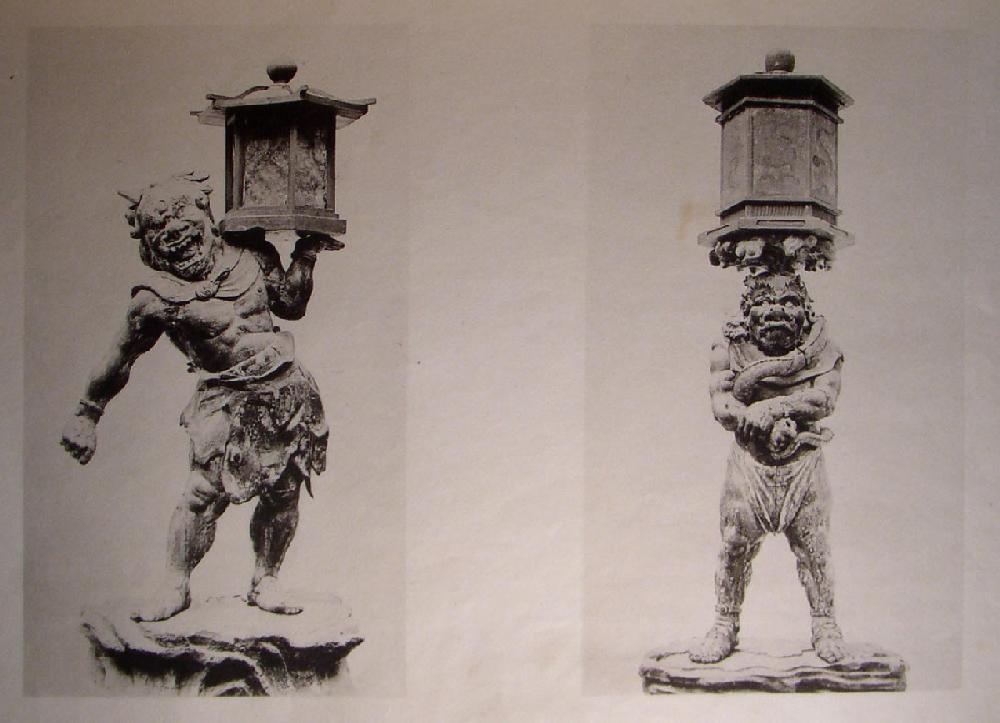


 "rawm"