


 ______________________________


Often the deeper problem hinted by a code smell can be uncovered when
the code is subjected to a short feedback cycle where it is refactored in
small, controlled steps, and the resulting design is examined to see if
there are any further code smells that indicate the need of more
refactoring. From the point of view of a programmer charged with
performing refactoring, code smells are heuristics
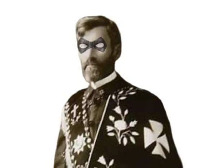
[img]http://bp0.blogger.com/_gJ6d5yFc7fw/R49quovJeLI/AAAAAAAAACU/GJhwKiyGveE/s320/Saint_Thomas_Aquinas.jpg[/img] wrote:Kodpese like a
Pokett.’ So sewn,
So sown, doubting
Thomas Aquinas fever-
Tree-rack’d, pester’d
By the scurrilous
Droll ‘daunce’ of
What the wind
Carries off, chaff
Of mandibula, speech
Put down for
Naught, the ‘severall
Fallaxes and elenches
Of them.’ So it
Be, writ city
Word-fluvial, its
Misshapen escarpments, its
Hoist and drivel.
One pounds together
A momentary mayhem,
And goes off.
[img]http://bp1.blogger.com/_gJ6d5yFc7fw/R4du54vJeFI/AAAAAAAAABk/jNlTKrB2QCA/s320/UOMO-DI-LATTA.jpg[/img] wrote:Type irretrievability, its kcheck noise
Hitting the firing bucket whilst
The rollers sweep and pivot,
Platen to lock-up, lock-
Up to ink. Seeing a
Gadabout, a gimp of delivery,
A khaki-pant’d boy with
A bouquet of jasmine achieving
A porch. Or seeing mocks
What it cannot see, a
Clown with a lash saying
Lug you’sef ovah heah,ya
Venereal fat and cupiditous one.
Calls unsatisfactory and earthly, bound up
In practical making, countersinking nail-
Heads, stuffing sphagnum into wounds,
Finding a plover’s egg under
A tump. One’s out in
The continual hungry world, indubitably
Motz, undeniably son, feverish for
Something beyond the wiry armature
Of the sensual.

certain of the difficulties encountered with Gallie’s proposition may be due
a consequence of the unintended conflation of two separate domains
associated with the term concept:
(a) the concepts (the abstract, ideal notions themselves), and
(b) the conceptions (the particular instantiations, or realizations of those
ideal and abstract notions).
In essence, Hart (1961), Rawls (1971), Dworkin (1972), and Lukes (1974)
distinguished between the "unity" of a notion and the "multiplicity" of its
possible instantiations.





 of a voice without a voicebox


![[img]http://bp0.blogger.com/_gJ6d5yFc7fw/R49quovJeLI/AAAAAAAAACU/GJhwKiyGveE/s320/Saint_Thomas_Aquinas.jpg[/img]](http://bp0.blogger.com/_gJ6d5yFc7fw/R49quovJeLI/AAAAAAAAACU/GJhwKiyGveE/s320/Saint_Thomas_Aquinas.jpg)
![[img]http://bp1.blogger.com/_gJ6d5yFc7fw/R4du54vJeFI/AAAAAAAAABk/jNlTKrB2QCA/s320/UOMO-DI-LATTA.jpg[/img]](http://bp1.blogger.com/_gJ6d5yFc7fw/R4du54vJeFI/AAAAAAAAABk/jNlTKrB2QCA/s320/UOMO-DI-LATTA.jpg)