


my mind begins to hum...

-
the fire elf

- Posts: 7300
- Joined: Fri Jul 30, 2004 10:43 pm
- Burning Since: 2002
- Location: nation
...
Body language is a term for communication using body movements or
gestures (such as the Pinocchio Syndrome) instead of, or in addition to,
sounds, verbal language or other communication. It forms part of the
category of paralanguage, which describes all forms of human
communication that are not verbal language. This includes the most subtle
of movements that many people are not aware of, including winking and
slight movement of the eyebrows. In addition body language can also
incorporate the use of facial expressions.
Voluntary body language refers to movement, gestures and poses
intentionally made by a person (e.g., conscious smiling, hand movements
and imitation). It can apply to many types of soundless communication.
Generally, movement made with full or partial intention and an
understanding of what it communicates can be considered voluntary.
Involuntary body language quite often takes the form of facial expression,
and has therefore been suggested as a means to identify the emotions of
a person with whom one is communicating.
The relation of body language to animal communication has been
discussed. Human paralanguage may represent a continuation of forms of
communication that our non-linguistic ancestors already used, or it may
be that it has been changed by co-existing with language. Some species
of animals are especially adept at detecting human body language, both
voluntary and involuntary: this is the basis of the Clever Hans effect (a
source of artifact in comparative psychology), and was also the reason for
trying to teach the chimpanzee Washoe to use American Sign Language
rather than speech — and perhaps the reason why the Washoe project
was more successful than some previous efforts to teach apes to use
human language.
Paralanguage refers to the non-verbal elements of communication used to
modify meaning and convey emotion. Paralanguage may be expressed
consciously or unconsciously, and it includes the pitch, volume, and, in
some cases, intonation of speech. Sometimes the definition is restricted to
vocally-produced sounds.
In text-only communication such as email, chatrooms and instant
messaging, paralinguistic elements can be displayed by emoticons, font
and color choices, capitalization and the use of non-alphabetic or abstract
characters.

gestures (such as the Pinocchio Syndrome) instead of, or in addition to,
sounds, verbal language or other communication. It forms part of the
category of paralanguage, which describes all forms of human
communication that are not verbal language. This includes the most subtle
of movements that many people are not aware of, including winking and
slight movement of the eyebrows. In addition body language can also
incorporate the use of facial expressions.
Voluntary body language refers to movement, gestures and poses
intentionally made by a person (e.g., conscious smiling, hand movements
and imitation). It can apply to many types of soundless communication.
Generally, movement made with full or partial intention and an
understanding of what it communicates can be considered voluntary.
Involuntary body language quite often takes the form of facial expression,
and has therefore been suggested as a means to identify the emotions of
a person with whom one is communicating.
The relation of body language to animal communication has been
discussed. Human paralanguage may represent a continuation of forms of
communication that our non-linguistic ancestors already used, or it may
be that it has been changed by co-existing with language. Some species
of animals are especially adept at detecting human body language, both
voluntary and involuntary: this is the basis of the Clever Hans effect (a
source of artifact in comparative psychology), and was also the reason for
trying to teach the chimpanzee Washoe to use American Sign Language
rather than speech — and perhaps the reason why the Washoe project
was more successful than some previous efforts to teach apes to use
human language.
Paralanguage refers to the non-verbal elements of communication used to
modify meaning and convey emotion. Paralanguage may be expressed
consciously or unconsciously, and it includes the pitch, volume, and, in
some cases, intonation of speech. Sometimes the definition is restricted to
vocally-produced sounds.
In text-only communication such as email, chatrooms and instant
messaging, paralinguistic elements can be displayed by emoticons, font
and color choices, capitalization and the use of non-alphabetic or abstract
characters.
instantiate vacuous truth




...
"strategies for satisfaction of human needs"In this sense, to be socially excluded is to be deprived from social
recognition and social value. In the sphere of politics, social recognition is
obtained by full citizenship; in the economic sphere (in capitalism) it
means being paid enough to be able to participate fully in the life of the
community.
"innovation in the sense of transforming and/or sustaining social relations"
[Origin: 1680–90; < Gk stratégÃa generalship, equiv. to stratég(ós)
military commander, general (strat(ós) army + -égos n. deriv. of ágein to
lead) + -ia -y3]
1. Also, strategics. the science or art of combining and employing the
means of war in planning and directing large military movements and
operations.
2. the use or an instance of using this science or art.
3. skillful use of a stratagem: The salesperson's strategy was to seem
always to agree with the customer.
4. a plan, method, or series of maneuvers or stratagems for obtaining a
specific goal or result: a strategy for getting ahead in the world.
Misdirection is a form of deception in which the attention of an audience is
focused on one thing in order to distract its attention from another.
...the limits of the human mind can be used to give the wrong picture and
memory. The mind can concentrate on only one thing at a time.
The "magician" uses this, and the "victim's" idea of how the world is
supposed to be, against him.
thusly the sociologically they wage a rehabilitation war, and call it anything but.
-
the fire elf
- Posts: 7300
- Joined: Fri Jul 30, 2004 10:43 pm
- Burning Since: 2002
- Location: nation
...
Nostradamus claimed to base his published predictions on judicial
astrology — the astrological assessment of the 'quality' of expected future
developments — but was heavily criticized by professional astrologers of
the day such as Laurens Videl for incompetence and for assuming
that "comparative horoscopy" (the comparison of future planetary
configurations with those of past events) could predict actual future
events.
Recent research suggests that much of his prophetic work paraphrases
collections of ancient end-of-the-world prophecies (mainly Bible-based),
supplemented with references to historical events and anthologies of
omen reports, and then projects those into the future with the aid of
comparative horoscopy. Hence the many predictions involving ancient
figures such as Sulla, Marius, Nero, and others, as well as his descriptions
of "battles in the clouds" and "frogs falling from the sky." Astrology itself
is mentioned only twice in Nostradamus' Preface and 41 times in the
Centuries themselves, but more frequently in his dedicatory Letter to King
Henri II.
astrology — the astrological assessment of the 'quality' of expected future
developments — but was heavily criticized by professional astrologers of
the day such as Laurens Videl for incompetence and for assuming
that "comparative horoscopy" (the comparison of future planetary
configurations with those of past events) could predict actual future
events.
Recent research suggests that much of his prophetic work paraphrases
collections of ancient end-of-the-world prophecies (mainly Bible-based),
supplemented with references to historical events and anthologies of
omen reports, and then projects those into the future with the aid of
comparative horoscopy. Hence the many predictions involving ancient
figures such as Sulla, Marius, Nero, and others, as well as his descriptions
of "battles in the clouds" and "frogs falling from the sky." Astrology itself
is mentioned only twice in Nostradamus' Preface and 41 times in the
Centuries themselves, but more frequently in his dedicatory Letter to King
Henri II.
Nostradamus' reliance on historical precedent is reflected in the fact that he explicitly rejected the label 'prophet' (i.e. a person having prophetic powers of his own) on several occasions:
Although, my son, I have used the word prophet, I would not attribute to myself a title of such lofty sublimity — Preface to César, 1555
Not that I would attribute to myself either the name or the role of a prophet — Preface to César, 1555
ome of [the prophets] predicted great and marvelous things to come: [though] for me, I in no way attribute to myself such a title here. — Letter to King Henri II, 1558
I do but make bold to predict (not that I guarantee the slightest thing at all), thanks to my researches and the consideration of what judicial Astrology promises me and sometimes gives me to know, principally in the form of warnings, so that folk may know that with which the celestial stars do threaten them. Not that I am foolish enough to pretend to be a prophet. — Open letter to Privy Councillor (later Chancellor) Birague, 15 June 1566
instantiate vacuous truth
-
the fire elf
- Posts: 7300
- Joined: Fri Jul 30, 2004 10:43 pm
- Burning Since: 2002
- Location: nation
...

Some biographical accounts of Nostradamus' life state that he was afraidSome scholars believe that Nostradamus wrote not to be a prophet, but to
comment on events that were happening in his own time, writing in his
elusive way — using highly metaphorical and cryptic language — to avoid
persecution.
of being persecuted for heresy by the Inquisition, but neither prophecy
nor astrology fell in this bracket, and he would have been in danger only
if he had practiced magic to support them. In fact, his relationship with
the Church as a prophet and healer was excellent. His brief imprisonment
at Marignane in late 1561 came about purely because he had published
his 1562 almanac without the prior permission of a bishop, contrary to a
recent royal decree.
Most of the quatrains deal with disasters, such as plagues, earthquakes,
wars, floods, invasions, murders, droughts, and battles — all undated and
based on foreshadowings by the Mirabilis Liber. Some quatrains cover
these disasters in overall terms; others concern a single person or small
group of persons. Some cover a single town, others several towns in
several countries. A major, underlying theme is an impending invasion of
Europe by Muslim forces from further east and south headed by the
expected Antichrist, directly reflecting the then-current Ottoman invasions
and the earlier Saracen (that is, Arab) equivalents, as well as the prior
expectations of the Mirabilis Liber. All of this is presented in the context of
the supposedly imminent end of the world, a conviction that sparked
numerous collections of end-time prophecies at the time, not least an
unpublished collection by Christopher Columbus.

...
Focusing is a naturally occurring human process.
Much of what a person knows has never been consciously thought and verbalized.
Then new words would come which framed new insights into the situation.
These successful patients were able to be successful because they could
move beyond the 'old thoughts' they'd already had which had not been
helpful to them, while remaining connected with their own experience.
Since these insights came from what they already knew implicitly,
they 'owned' these insights and therefore could act from therm.
Much of what a person knows has never been consciously thought and verbalized.
Then new words would come which framed new insights into the situation.
These successful patients were able to be successful because they could
move beyond the 'old thoughts' they'd already had which had not been
helpful to them, while remaining connected with their own experience.
Since these insights came from what they already knew implicitly,
they 'owned' these insights and therefore could act from therm.
sphera spinning circa gradually midst photon shaft grazing electron soo flit while neutron's gazing
-
the fire elf
- Posts: 7300
- Joined: Fri Jul 30, 2004 10:43 pm
- Burning Since: 2002
- Location: nation
...
Action, is a concept of interest in philosophy, it has developed into a sub-
field called philosophy of action. Action is what an agent can do.
intention, a goal, and a bodily movement guided by the agent.
However, others think it is not an action unless the decision is carried out.
Unsuccessfully trying to do something might also not be considered an
action for similar reasons (for e.g. lack of bodily movement). It is
contentions whether Believing, intending, and thinking are actions since
they are mental events.
actions and distinguish them from similar phenomena. Other concerns
include individuating actions, explaining the relationship between actions
and their effects, explaining how an action is related to the beliefs and
desires which cause and/or justify it (see practical reason), as well as
examining the nature of agency.
actions and reactions of other individuals and is modified based on those
events.
Action in sociology can either mean a basic action (one that has a
meaning) or a more advanced social action, one that not only has a
meaning but is directed at other humans and induces a response.
as follows: first and most basic are animal-like behaviors, i.e. various
physical movements of the body. Then there are actions - movements
with a meaning and purpose. Then there are social behaviors, which are
addressed towards other people, and social actions, which further require
a response from another person. Next are social contacts, a pair of social
actions, which form the beginning of social interactions. Social interactions
in turn form the basis of social relations.
field called philosophy of action. Action is what an agent can do.
For example, throwing a ball is an instance of action; it involves anNostradamus wrote:Following popular trends, he wrote an almanac for
1550, for the first time Latinizing his name from Nostredame to
Nostradamus. He was so encouraged by the almanac's success that he
decided to write one or more annually.
intention, a goal, and a bodily movement guided by the agent.
Other events are less clearly defined as actions or not.It was mainly in reaction to the almanacs that the nobility and other
prominent persons from far away soon started asking for horoscopes and
advice from him, though he generally expected his clients to supply the
birth charts on which the horoscopes would be based, rather than
supplying them himself, as was the normal practice of professional
astrologers.
Deciding to do something might be considered a mental action by some.He then began his project of writing a book of one thousand quatrains
However, others think it is not an action unless the decision is carried out.
Unsuccessfully trying to do something might also not be considered an
action for similar reasons (for e.g. lack of bodily movement). It is
contentions whether Believing, intending, and thinking are actions since
they are mental events.
A primary concern of philosophy of action is to analyze the nature ofFeeling vulnerable to religious fanatics, however, he devised a method of
obscuring his meaning by using "Virgilianized" syntax, word games and a
mixture of languages such as Greek, Italian, Latin, and Provençal.
actions and distinguish them from similar phenomena. Other concerns
include individuating actions, explaining the relationship between actions
and their effects, explaining how an action is related to the beliefs and
desires which cause and/or justify it (see practical reason), as well as
examining the nature of agency.
In sociology, social actions refer to any action that takes into accountThe quatrains, published in a book titled Les Propheties (The Prophecies),
received a mixed reaction when they were published. Some people
thought Nostradamus was a servant of evil, a fake, or insane, while many
of the elite thought his quatrains were spiritually inspired prophecies —
as, in the light of their post-Biblical sources, Nostradamus himself was
indeed prone to claim.
actions and reactions of other individuals and is modified based on those
events.
Action in sociology can either mean a basic action (one that has a
meaning) or a more advanced social action, one that not only has a
meaning but is directed at other humans and induces a response.
Forms of activity and interpersonal relations in sociology can be describedAfter reading his almanacs for 1555, which hinted at unnamed threats to
the royal family, she summoned him to Paris to explain them and to draw
up horoscopes for her children. At the time, he feared that he would be
beheaded, but by the time of his death in 1566, Catherine had made him
Counselor and Physician-in-Ordinary to the King.
as follows: first and most basic are animal-like behaviors, i.e. various
physical movements of the body. Then there are actions - movements
with a meaning and purpose. Then there are social behaviors, which are
addressed towards other people, and social actions, which further require
a response from another person. Next are social contacts, a pair of social
actions, which form the beginning of social interactions. Social interactions
in turn form the basis of social relations.
By 1566, Nostradamus' gout, which had plagued him painfully for many
years and made movement very difficult, turned into oedema, or dropsy.
In late June he summoned his lawyer to draw up an extensive will
bequeathing his property plus 3,444 crowns (around $300,000 US
today) — minus a few debts — to his wife pending her remarriage, in trust
for her sons pending their twenty-fifth birthdays and her daughters
pending their marriages.
...
In the fields of information science, communication, and industrial design,
there is debate over the meaning of Interactivity. In the "contingency
view" of interactivity, there are three levels: Noninteractive, when a
message is not related to previous messages; Reactive, when a message
is related only to one immediately previous message; and Interactive,
when a message is related to a number of previous messages and to the
relationship between them.
Because of that, many conceptualizations of interactivity are based on
anthropomorphic definitions. For example, complex systems that detect
and react to human behavior are sometimes called interactive. Under this
perspective, interaction includes responses to human physical
manipulation like movement, body language, and/or changes in
psychological states.
persistence of behavior.

A reward is that which is given following the occurrence of a behavior with
the intention of acknowledging the positive nature of that behavior, and
often with the additional intent of encouraging it to happen again. The
definition of reward is not to be confused with the definition of reinforcer,
which includes a measured increase in the rate of a desirable behavior
following the addition of something to the environment. There are two
kinds of rewards, extrinsic and intrinsic. Extrinsic rewards are external to,
or outside of, the individual; for example, praise or money. Intrinsic
rewards are internal to, or within, the individual; for example, satisfaction
or accomplishment.
there is debate over the meaning of Interactivity. In the "contingency
view" of interactivity, there are three levels: Noninteractive, when a
message is not related to previous messages; Reactive, when a message
is related only to one immediately previous message; and Interactive,
when a message is related to a number of previous messages and to the
relationship between them.
Human communication is the basic example of interactive communication.Interactivity is similar to the degree of responsiveness, and is examined
as a communication process in which each message is related to the
previous messages exchanged, and to the relation of those messages to
the messages preceding them.
Because of that, many conceptualizations of interactivity are based on
anthropomorphic definitions. For example, complex systems that detect
and react to human behavior are sometimes called interactive. Under this
perspective, interaction includes responses to human physical
manipulation like movement, body language, and/or changes in
psychological states.
In psychology, motivation refers to the initiation, direction, intensity andIn the context of communication between a human and an artifact,
interactivity refers to the artefact’s interactive behaviour as experienced
by the human user. This is different from other aspects of the artifact
such as its visual appearance, its internal working, and the meaning of the
signs it might mediate. For example, the interactivity of an iPod is not its
physical shape and colour (its so-called "design"), its ability to play music,
or its storage capacity—it is the behaviour of its user interface as
experienced by its user.
persistence of behavior.
For the Rosicrucians there is a distinction to be made between Jesus and the Christ. Jesus is considered a high Initiate of the human life wave (which evolves under the cycle of rebirth) and of a singularly pure type of mind, vastly superior to the great majority of the present humanity. He was educated during his youth among the Essenes and thus prepared himself for the greatest honor ever bestowed upon a human being: to deliver his pure, passionless, highly evolved physical body and vital body
A reward is that which is given following the occurrence of a behavior with
the intention of acknowledging the positive nature of that behavior, and
often with the additional intent of encouraging it to happen again. The
definition of reward is not to be confused with the definition of reinforcer,
which includes a measured increase in the rate of a desirable behavior
following the addition of something to the environment. There are two
kinds of rewards, extrinsic and intrinsic. Extrinsic rewards are external to,
or outside of, the individual; for example, praise or money. Intrinsic
rewards are internal to, or within, the individual; for example, satisfaction
or accomplishment.
vedically intuited wrote:In Hinduism, Kali (IAST: káli; DevnÄ
...
A principle signifies a point (or points) of probability on a subject (e.g.,
the principle of creativity), which allows for the formation of rule or norm
or law by (human) interpretation of the phenomena (events) that can be
created. The rules, norms and laws depend on and co-create a particular
context to formulate. A principle is the underlying part (or spirit) of the
basis for an evolutionary normative or formative development, which is
the object of subjective experience and/or interpretation. For example,
the ethics of someone may be seen as a set of principles that the
individual obeys in the form of rules, as guidance or law. These principles
thus form the basis for such ethics.
principle will not / cannot be questioned or further derived (unless you
create new rules). This is a convenient way of reducing the complexity of
an argumentation.
understanding of the underlying principle(s) of events...
the principle of creativity), which allows for the formation of rule or norm
or law by (human) interpretation of the phenomena (events) that can be
created. The rules, norms and laws depend on and co-create a particular
context to formulate. A principle is the underlying part (or spirit) of the
basis for an evolutionary normative or formative development, which is
the object of subjective experience and/or interpretation. For example,
the ethics of someone may be seen as a set of principles that the
individual obeys in the form of rules, as guidance or law. These principles
thus form the basis for such ethics.
Reducing a rule to its principle says that, for the purpose at hand, theIn chemistry and biology, catalysis is the acceleration (increase in rate) of
a chemical reaction by means of a substance, called a catalyst, that is
itself not consumed by the overall reaction.
principle will not / cannot be questioned or further derived (unless you
create new rules). This is a convenient way of reducing the complexity of
an argumentation.
A principled view for example, implies that an individual has a firmA catalyst provides an alternative route of reaction where the activation
energy is lower than the original chemical reaction. Catalysts participate
in reactions but are neither reactants nor products of the reaction they
catalyze. An exception is the process of autocatalysis where the product
of a reaction helps to accelerate the same reaction.
understanding of the underlying principle(s) of events...
An autocatalytic set is a collection of entities, each of which can be
created catalytically by other entities within the set, such that as a whole,
the set is able to catalyze its own production.
-
the fire elf
- Posts: 7300
- Joined: Fri Jul 30, 2004 10:43 pm
- Burning Since: 2002
- Location: nation
...
like one piece of brass shall tarnish,
thus another in another time and place shall tarnish...
it is a quality of the substance...
an attribute.
the blood demonstrates knowledge of such nature,
even when the mind hasn't a clue.
it acts on the principle of a reversible oxidation process;
allows itself form and function surpassing any ball-centric passtime
burningman sought to create alternative actions in a temporary context,
setting aside the 'doing for money' so that others would 'do for your money'
and i do not need to explain my mood.
it is.
that is enough
thus another in another time and place shall tarnish...
it is a quality of the substance...
an attribute.
the blood demonstrates knowledge of such nature,
even when the mind hasn't a clue.
it acts on the principle of a reversible oxidation process;
allows itself form and function surpassing any ball-centric passtime
burningman sought to create alternative actions in a temporary context,
setting aside the 'doing for money' so that others would 'do for your money'
and i do not need to explain my mood.
it is.
that is enough
instantiate vacuous truth
...
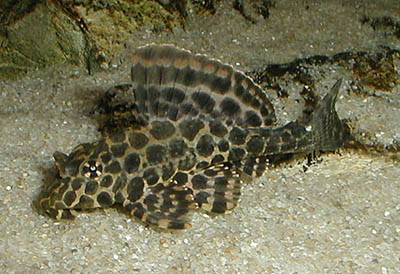
Plecos are extremely popular in aquaria for their ability.
Plecostomuses are omnivorous.
During the day, their unusual omega irises block a lot of the light out of
their eyes. The iris opens at night. Plecos can also wink by rolling the eye
into the head.
As they age, plecostomus can become more territorial and are best kept individually.
...a solitary plecostomus will live amicably enough in a community...
Most people think they only grow large enough for their aquarium,
but a small tank only slows their rate of growth.
“Environmental Impact Assessment can be defined as: The process ofif a person holds valued social roles, a person is highly likely to receive
from society those good things in life that are available or at least the
opportunities for obtaining them. In other words, all sorts of good things
that other people are able to convey are almost automatically apt to be
accorded to a person who holds societally valued roles, at least within the
resources and norms of his/her society.
identifying, predicting, evaluating and mitigating the biophysical, social,
and other relevant effects of development proposals prior to major
decisions being taken and commitments made.â€
-
the fire elf
- Posts: 7300
- Joined: Fri Jul 30, 2004 10:43 pm
- Burning Since: 2002
- Location: nation
...
IF YOU EXPECT A CERTAIN LOT,
THEN SURELY IT TAKES A CERTAIN LOT TO SATISFY YOU.
I LEARNED AS ONE WHO WALKED THROUGH CHANGING THE WORLD.
'tWAS GIVEN A TITLE OF CHRIST
THEN SURELY IT TAKES A CERTAIN LOT TO SATISFY YOU.
I LEARNED AS ONE WHO WALKED THROUGH CHANGING THE WORLD.
'tWAS GIVEN A TITLE OF CHRIST
instantiate vacuous truth
...
all attractive, supreme enjoyer
all attractive, supreme enjoyer
all attractive, supreme enjoyer
all attractive, supreme enjoyer
all attractive, supreme enjoyer
all attractive, supreme enjoyer
all attractive, supreme enjoyer
all attractive, supreme enjoyer
all attractive, supreme enjoyer
sphera spinning circa gradually midst photon shaft grazing electron soo flit while neutron's gazing
-
the fire elf
- Posts: 7300
- Joined: Fri Jul 30, 2004 10:43 pm
- Burning Since: 2002
- Location: nation
...
i imagine soft rolling clouds
skattered across a moonlit sky
as we sit in a garden,
my mother and i
soft music wafts through the house
the air is warm and impeccably clean
the sounds of waters
rushing over rock
the candles
the inscense
the warm knowing eyes
brimming in proud joy
she likes it when the koi nibble her toes
her man himself
flows through the curtained door,
all wiskers and wise
with a merry glint in his eye
and thousands of improvements in mind
carried to the world, each and every morn
skattered across a moonlit sky
as we sit in a garden,
my mother and i
soft music wafts through the house
the air is warm and impeccably clean
the sounds of waters
rushing over rock
the candles
the inscense
the warm knowing eyes
brimming in proud joy
she likes it when the koi nibble her toes
her man himself
flows through the curtained door,
all wiskers and wise
with a merry glint in his eye
and thousands of improvements in mind
carried to the world, each and every morn
instantiate vacuous truth
-
the fire elf
- Posts: 7300
- Joined: Fri Jul 30, 2004 10:43 pm
- Burning Since: 2002
- Location: nation
...
with fields of vision bordered by phantom visual awareness of skin
the awareness peers through layers of cell
such that each moment of sight,
to be fully comprehended,
must carry with it context of the border.
and that's atmosphere we're looking into.
it sways to and fro
and rubs upon you what you dirty it with
it's been known by eagles, who can fly upward in circles without so much beating of wings
and they have covered ever so much territory
since their ancestors 'took off'
yet surely the greatest challenge 'they were thrown'
were the designers of the most recent human way of "life"
deadly, their designs "outlived" them
rome burned and spawn the pattern
how much of your motivation is founded in direct understanding,
and how much through another who dwelled in another time?
like those who were before,
do we ourselves not ride the cusp of time?
what pharoh in egypt, if you somehow managed to drop the awareness in front of a crowd of screaming tweens, would not have his mind unhinge>?
or would he become rather annoyed?
or would he cringe at the sight of a backdrop of buildings
and assume the slaves finally won?
or would he merely call for a magi, and set about in old ways?...
i like different
i love different
i walk different
i talk different
how much more different do i need to be, before you realize you're not like me?
life forms mobile sculptures,
and i am such as one of life's sculptures,
thus we are one.
for those whorecognize choice,
and how it pertains to their existance,
this is what was born into
and there is that yet to be
yet to be is formed by activity
loong ridden to arrive here
look about you;whats around
these your highest kin?
just take notice, no need to correct
let them choose their actions
let them be their's to direct
your mind is your silent witness
then together we'll move
drawn from unknown depths within
impetus of nature shall ensure
collectively, we'll win
we shall win ourselves
the awareness peers through layers of cell
such that each moment of sight,
to be fully comprehended,
must carry with it context of the border.
and that's atmosphere we're looking into.
it sways to and fro
and rubs upon you what you dirty it with
it's been known by eagles, who can fly upward in circles without so much beating of wings
and they have covered ever so much territory
since their ancestors 'took off'
yet surely the greatest challenge 'they were thrown'
were the designers of the most recent human way of "life"
deadly, their designs "outlived" them
rome burned and spawn the pattern
how much of your motivation is founded in direct understanding,
and how much through another who dwelled in another time?
like those who were before,
do we ourselves not ride the cusp of time?
what pharoh in egypt, if you somehow managed to drop the awareness in front of a crowd of screaming tweens, would not have his mind unhinge>?
or would he become rather annoyed?
or would he cringe at the sight of a backdrop of buildings
and assume the slaves finally won?
or would he merely call for a magi, and set about in old ways?...
i like different
i love different
i walk different
i talk different
how much more different do i need to be, before you realize you're not like me?
life forms mobile sculptures,
and i am such as one of life's sculptures,
thus we are one.
for those whorecognize choice,
and how it pertains to their existance,
this is what was born into
and there is that yet to be
yet to be is formed by activity
loong ridden to arrive here
look about you;whats around
these your highest kin?
just take notice, no need to correct
let them choose their actions
let them be their's to direct
your mind is your silent witness
then together we'll move
drawn from unknown depths within
impetus of nature shall ensure
collectively, we'll win
we shall win ourselves
instantiate vacuous truth
-
the fire elf
- Posts: 7300
- Joined: Fri Jul 30, 2004 10:43 pm
- Burning Since: 2002
- Location: nation
...
would it not be worth the effort if only for the people drawn together by stuff?
-
the fire elf
- Posts: 7300
- Joined: Fri Jul 30, 2004 10:43 pm
- Burning Since: 2002
- Location: nation
...
the net came out cloistered...
and they habit what they're used to typing and clicking,
or they expand horizons of word image thought
depending on which way they think to look
and they habit what they're used to typing and clicking,
or they expand horizons of word image thought
depending on which way they think to look
instantiate vacuous truth
-
the fire elf
- Posts: 7300
- Joined: Fri Jul 30, 2004 10:43 pm
- Burning Since: 2002
- Location: nation
...

The world the novel describes is a utopia, albeit an ironic one: humanity is
carefree, healthy and technologically advanced. Warfare and poverty
have been eliminated and everyone is permanently happy. The irony is
that all of these things have been achieved by eliminating many things
that humans consider to be central to their identity — family, culture, art,
literature, science, religion, and philosophy. It is also a hedonistic society,
deriving pleasure from promiscuous sex and drug use, especially the use
of soma, a powerful drug taken to escape pain and bad memories through
hallucinatory fantasies. Additionally, stability has been achieved and is
maintained via deliberately engineered and rigidly enforced social
stratification.
http://en.wikipedia.org/wiki/Brave_new_world

Upon arrival at Battle School, Ender is immediately singled out by the
administration and kept at arm's length from the camaraderie of the
students there. He moves quickly from army to army, annoying many of
his commanders with his brilliance- which serves to reflect their
inadequacy, and he quickly becomes the top-ranking soldier in school.
Ender finds a way around the teacher's psychological segregation of him
by forming his own nightly "practice" sessions, instructing anyone who
wishes to come in zero-gravity battle simulations, teaching other students
strategy and tactics regardless of their given army alliance.
Meanwhile, Ender is participating off and on in a fantasy video game
created by the administration to monitor their students psychologically.
http://en.wikipedia.org/wiki/Enders_game

In this context esoteric means that the transmission of certain
accelerating factors only occurs directly from teacher to student during an
initiation and cannot be simply learned from a book. Many techniques are
also commonly said to be secret, but some Vajrayana teachers have
responded that the secrecy itself is not important but only a side-effect of
the reality that the techniques have no validity outside the teacher-
student lineage. As these techniques are said to be highly effective, when
not practiced properly, the practitioner can harm him/herself physically
and mentally.
Hypomania (literally, below mania) is a mood state characterized by
persistent and pervasive elated or irritable mood, and thoughts and
behaviors that are consistent with such a mood state. It is distinguished
from mania by the absence of psychotic symptoms and by its lower
degree of impact on functioning. Hypomania is a feature of some mood
disorders, such as bipolar II disorder and cyclothymia. Though hypomanic
people are often associated with bipolar disorder, it is in this state that
many creative talents are in their most productive and successful mood.
instantiate vacuous truth
-
the fire elf
- Posts: 7300
- Joined: Fri Jul 30, 2004 10:43 pm
- Burning Since: 2002
- Location: nation
...
John Gartner's unverified book The Hypomanic Edge claims notable
people including Christopher Columbus, Alexander Hamilton, Andrew
Carnegie and Louis B. Mayer owe their innovativeness and drive, as well
as their eccentricities, to hypomanic temperaments; critics, however,
assert that Gartner vastly overstates his case. Within the book, though,
Gartner does point out that the constructive behaviors associated with
hypomania may contribute to bipolar ...order's evolutionary survival.
people including Christopher Columbus, Alexander Hamilton, Andrew
Carnegie and Louis B. Mayer owe their innovativeness and drive, as well
as their eccentricities, to hypomanic temperaments; critics, however,
assert that Gartner vastly overstates his case. Within the book, though,
Gartner does point out that the constructive behaviors associated with
hypomania may contribute to bipolar ...order's evolutionary survival.
-
the fire elf
- Posts: 7300
- Joined: Fri Jul 30, 2004 10:43 pm
- Burning Since: 2002
- Location: nation
...
People with hypomania are generally perceived as being energetic,
euphoric, overflowing with new ideas, and sometimes highly confident and
charismatic, and unlike full-blown mania, they are sufficiently capable of
coherent thought and action to participate in everyday activities. One in
the state of hypomania might be immune to fear and doubt and have little
social inhibition. They may talk to strangers easily, offer solutions to
problems, and find pleasure in small activities.

euphoric, overflowing with new ideas, and sometimes highly confident and
charismatic, and unlike full-blown mania, they are sufficiently capable of
coherent thought and action to participate in everyday activities. One in
the state of hypomania might be immune to fear and doubt and have little
social inhibition. They may talk to strangers easily, offer solutions to
problems, and find pleasure in small activities.
In Islamic eschatology the Mahdi (مهدي transliteration: Mahdī, also
Mehdi; "Guided One") is the prophesied redeemer of Islam. The advent of
Mahdi is not a universally accepted concept in Islam, and among those
that accept the Mahdi there are basic differences among different sects of
Muslims about the timing and nature of his advent and guidance.

In October, 2006, Iraqi Shiite residents of Baghdad’s Sadr City expressed
outrage over an image of ‘Buddy Christ’ that appeared in pamphlets and
posters in the area following a joint US-Iraqi operation. The posters
contained the image of Buddy Christ, a forgery of a US military crest and
the outline of a plan to subjugate the area. Residents protested because
they believed the images were mocking the Mahdi.
Mehdi; "Guided One") is the prophesied redeemer of Islam. The advent of
Mahdi is not a universally accepted concept in Islam, and among those
that accept the Mahdi there are basic differences among different sects of
Muslims about the timing and nature of his advent and guidance.
In October, 2006, Iraqi Shiite residents of Baghdad’s Sadr City expressed
outrage over an image of ‘Buddy Christ’ that appeared in pamphlets and
posters in the area following a joint US-Iraqi operation. The posters
contained the image of Buddy Christ, a forgery of a US military crest and
the outline of a plan to subjugate the area. Residents protested because
they believed the images were mocking the Mahdi.
...
According to author Robert Neuwirth, there may be as many as one billion
squatters globally, or about one of every seven people.
Squatting is the act of occupying an abandoned or unoccupied space or
building that the squatter does not own, rent or otherwise have
permission to use.

Graffiti found in Málaga, Spain of the international squatter's symbol.
To squat in many countries is in itself a crime; in others it is only seen as
a civil conflict between the owner and the occupants. Property law and the
state have traditionally favored the property owner. However, in many
cases where squatters had de facto ownership, laws have been changed
to legitimize their status. Squatters often claim rights over the spaces
they have squatted by virtue of occupation, rather than ownership; in this
sense, squatting is similar to (and potentially a necessary condition of)
adverse possession, by which a possessor of real property without title
may eventually gain legal title to the real property.
Colin Ward states that "Squatting is the oldest mode of tenure in the
world, and we are all descended from squatters. This is as true of the
Queen [of the United Kingdom] with her 176,000 acres as it is of the 54
per cent of householders in Britain who are owner-occupiers. They are all
the ultimate recipients of stolen land, for to regard our planet as a
commodity offends every conceivable principle of natural rights."
Besides being residences, some squats are used as social centres or host
give-away shops, pirate radio stations and cafés. In Spanish-speaking
countries squatters receive several names, like okupas in Spain or
Argentina (from the verb ocupar meaning "to occupy"), or paracaidistas in
Mexico (meaning "paratroopers", because they "parachute" themselves at
unoccupied land). In Argentina there was even a popular TV show under
that name. Eventually, okupas tend to form tiny but solid communities.
In the Netherlands, if a building is not in use for twelve months and the
owner has no pressing need to use it (such as a rental contract starting in
the next month), then it can be legally squatted. The only illegal aspect
would be forcing an entry, if that was necessary. When a building is
squatted it is normal to send the owner a letter and to invite the police to
inspect the squat. The police check whether the place is indeed lived in by
the squatter — in legal terms this means there must be a bed, a chair, a
table and a working lock in the door which the squatter can open and
close.
In cities there is often a kraakspreekuur (squatters' conversation hour),
at which people planning to squat can get advice from experienced
squatters. In Amsterdam, where the squatting community is large, there
are three kraakspreekuur sessions in different areas of the city and so-
called 'wild' squatting (squatting a building without the help of the local
group) is not encouraged.
any experienced squatters glancing this way?
squatters globally, or about one of every seven people.
Squatting is the act of occupying an abandoned or unoccupied space or
building that the squatter does not own, rent or otherwise have
permission to use.
Graffiti found in Málaga, Spain of the international squatter's symbol.
To squat in many countries is in itself a crime; in others it is only seen as
a civil conflict between the owner and the occupants. Property law and the
state have traditionally favored the property owner. However, in many
cases where squatters had de facto ownership, laws have been changed
to legitimize their status. Squatters often claim rights over the spaces
they have squatted by virtue of occupation, rather than ownership; in this
sense, squatting is similar to (and potentially a necessary condition of)
adverse possession, by which a possessor of real property without title
may eventually gain legal title to the real property.
Colin Ward states that "Squatting is the oldest mode of tenure in the
world, and we are all descended from squatters. This is as true of the
Queen [of the United Kingdom] with her 176,000 acres as it is of the 54
per cent of householders in Britain who are owner-occupiers. They are all
the ultimate recipients of stolen land, for to regard our planet as a
commodity offends every conceivable principle of natural rights."
Besides being residences, some squats are used as social centres or host
give-away shops, pirate radio stations and cafés. In Spanish-speaking
countries squatters receive several names, like okupas in Spain or
Argentina (from the verb ocupar meaning "to occupy"), or paracaidistas in
Mexico (meaning "paratroopers", because they "parachute" themselves at
unoccupied land). In Argentina there was even a popular TV show under
that name. Eventually, okupas tend to form tiny but solid communities.
In the Netherlands, if a building is not in use for twelve months and the
owner has no pressing need to use it (such as a rental contract starting in
the next month), then it can be legally squatted. The only illegal aspect
would be forcing an entry, if that was necessary. When a building is
squatted it is normal to send the owner a letter and to invite the police to
inspect the squat. The police check whether the place is indeed lived in by
the squatter — in legal terms this means there must be a bed, a chair, a
table and a working lock in the door which the squatter can open and
close.
In cities there is often a kraakspreekuur (squatters' conversation hour),
at which people planning to squat can get advice from experienced
squatters. In Amsterdam, where the squatting community is large, there
are three kraakspreekuur sessions in different areas of the city and so-
called 'wild' squatting (squatting a building without the help of the local
group) is not encouraged.
any experienced squatters glancing this way?
...
Mind refers to the collective aspects of intellect and consciousness which
are manifest in some combination of thought, perception, emotion, will
and imagination.
In popular usage mind is frequently synonymous with thought: It is that
private conversation with ourselves that we carry on "inside our heads."
Imagination is accepted as the innate ability and process to invent partial
or complete personal realms within the mind from elements derived from
sense perceptions of the shared world. The term is technically used in
psychology for the process of reviving in the mind percepts of objects
formerly given in sense perception. Since this use of the term conflicts
with that of ordinary language, some psychologists have preferred to
describe this process as "imaging" or "imagery" or to speak of it
as "reproductive" as opposed to "productive" or "constructive" imagination.
Consciousness is a quality of the mind generally regarded to comprise
qualities such as subjectivity, self-awareness, sentience, sapience, and
the ability to perceive the relationship between oneself and one's
environment.
Suffering in Zen Buddhist philosophy is caused by attaching firmly to the
narrow conception of an unchanging self in a vast impermanent setting.
Once one is aware of this shackle, one can begin to understand the self
from a more objective perspective.
A functional magnetic resonance imaging (fMRI) experiment by Ilan
Goldberg et al. (April 19, 2006) in Neuron (vol 50, p 329) has
demonstrated the functional separation of sensory processing and self-
awareness. Self-awareness appears to be processed in the superior
frontal gyrus.

The superior frontal gyrus makes up about one-third of the frontal lobe of
the human brain.
The superior frontal gyrus, like the inferior frontal gyrus and the middle
frontal gyrus, is more of a region than a true gyrus.
In 1998, neurosurgeon Itzak Fried described a 16-year-old female patient
(referred to as "patient AK") who laughed when her SFG was stimulated
with electric current during treatment for epilepsy. Electrical stimulation
was applied to the cortical surface of AK's left frontal lobe while an
attempt was made to locate the focus of her epileptic seizures (which
were never accompanied by laughter).
Fried identified a 2 cm by 2 cm area on the left SFG where stimulation
produced laughter consistently (over several trials). AK reported that the
laughter was accompanied by a sensation of merriment or mirth. AK gave
a different explanation for the laughter each time, attributing it to an
(unfunny) external stimulus. Thus, laughter was attributed to the picture
she was asked to name (saying "the horse is funny"), or to the sentence
she was asked to read, or to persons present in the room ("you guys are
just so funny... standing around").

are manifest in some combination of thought, perception, emotion, will
and imagination.
In popular usage mind is frequently synonymous with thought: It is that
private conversation with ourselves that we carry on "inside our heads."
Imagination is accepted as the innate ability and process to invent partial
or complete personal realms within the mind from elements derived from
sense perceptions of the shared world. The term is technically used in
psychology for the process of reviving in the mind percepts of objects
formerly given in sense perception. Since this use of the term conflicts
with that of ordinary language, some psychologists have preferred to
describe this process as "imaging" or "imagery" or to speak of it
as "reproductive" as opposed to "productive" or "constructive" imagination.
Consciousness is a quality of the mind generally regarded to comprise
qualities such as subjectivity, self-awareness, sentience, sapience, and
the ability to perceive the relationship between oneself and one's
environment.
Suffering in Zen Buddhist philosophy is caused by attaching firmly to the
narrow conception of an unchanging self in a vast impermanent setting.
Once one is aware of this shackle, one can begin to understand the self
from a more objective perspective.
A functional magnetic resonance imaging (fMRI) experiment by Ilan
Goldberg et al. (April 19, 2006) in Neuron (vol 50, p 329) has
demonstrated the functional separation of sensory processing and self-
awareness. Self-awareness appears to be processed in the superior
frontal gyrus.
The superior frontal gyrus makes up about one-third of the frontal lobe of
the human brain.
The superior frontal gyrus, like the inferior frontal gyrus and the middle
frontal gyrus, is more of a region than a true gyrus.
In 1998, neurosurgeon Itzak Fried described a 16-year-old female patient
(referred to as "patient AK") who laughed when her SFG was stimulated
with electric current during treatment for epilepsy. Electrical stimulation
was applied to the cortical surface of AK's left frontal lobe while an
attempt was made to locate the focus of her epileptic seizures (which
were never accompanied by laughter).
Fried identified a 2 cm by 2 cm area on the left SFG where stimulation
produced laughter consistently (over several trials). AK reported that the
laughter was accompanied by a sensation of merriment or mirth. AK gave
a different explanation for the laughter each time, attributing it to an
(unfunny) external stimulus. Thus, laughter was attributed to the picture
she was asked to name (saying "the horse is funny"), or to the sentence
she was asked to read, or to persons present in the room ("you guys are
just so funny... standing around").


 ________________________