CB-Set.png
G376Thai.png

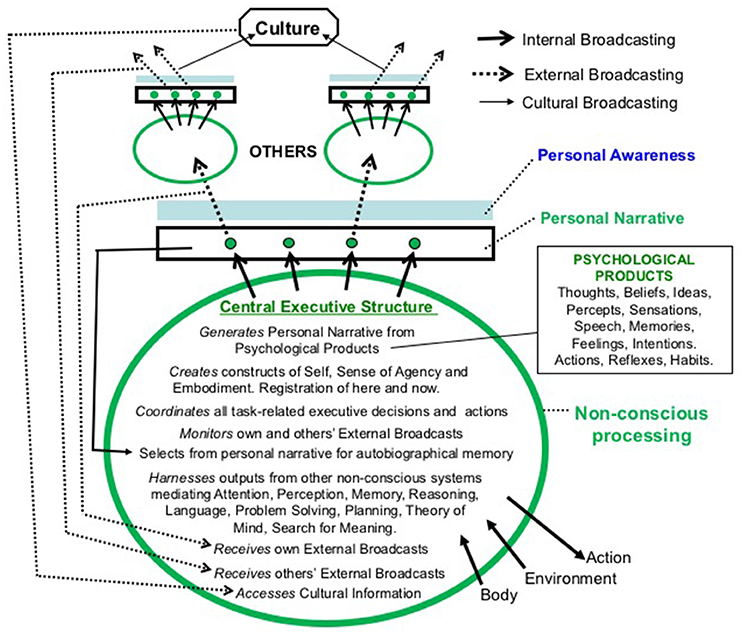
Stephen Wolfram's Take on Artificial Intelligence & The Future of HumanityStephen Wolfram wrote:The weather has a mind of its own
Simon of the Playa wrote:http://www.monbiot.com/2017/11/24/everything-must-go/

The message of this book still holds today: The earth’s interlocking resources – the global system of nature in which we all live – probably cannot support present rates of economic and population growth much beyond the year 2100, if that long, even with advanced technology. In the summer of 1970, an international team of researchers at the Massachusetts Institute of Technology began a study of the implications of continued worldwide growth. They examined the five basic factors that determine and, in their interactions, ultimately limit growth on this planet-population increase, agricultural production, nonrenewable resource depletion, industrial output, and pollution generation. The MIT team fed data on these five factors into a global computer model and then tested the behavior of the model under several sets of assumptions to determine alternative patterns for mankind’s future. The Limits to Growth is the nontechnical report of their findings. The book contains a message of hope, as well: Man can create a society in which he can live indefinitely on earth if he imposes limits on himself and his production of material goods to achieve a state of global equilibrium with population and production in carefully selected balance.

Courtesy of our friends at Louis Vuitton.Simon of the Playa wrote:https://i-d.vice.com/en_uk/article/595b ... apocalypse
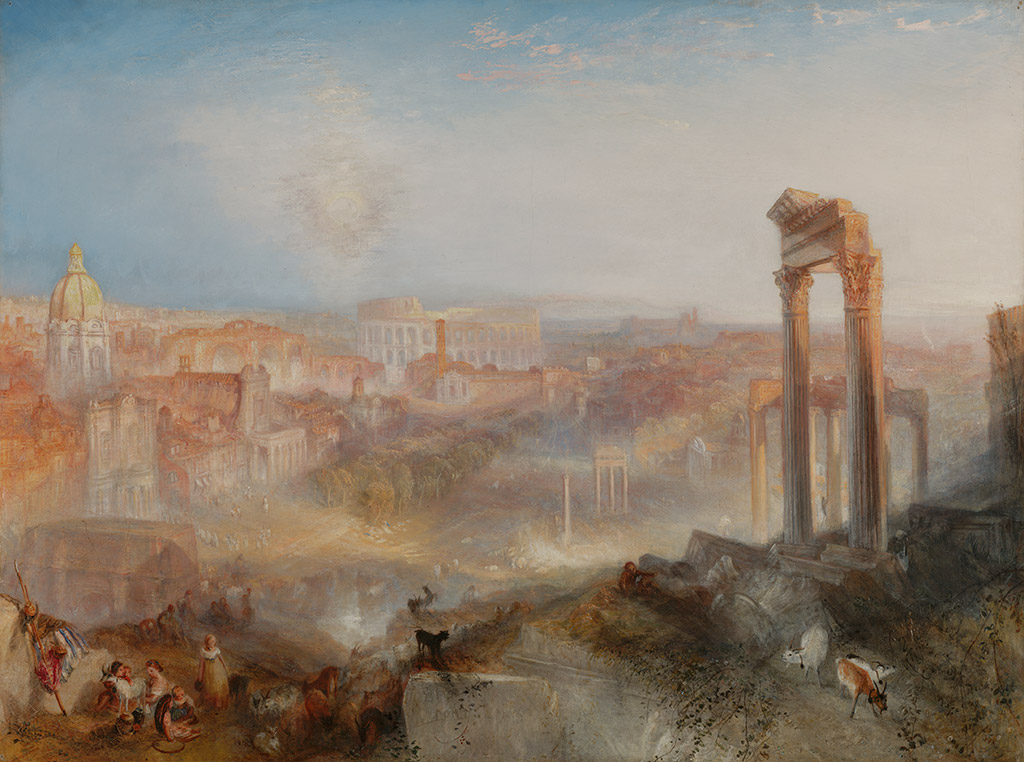
Lucius Vuittonicus wrote:A founder of watercolor landscape painting and a virtuoso with oils, Turner is considered a precursor of the Impressionist, Post-Impressionist and even Abstract painting styles. Ancient Rome draws on ancient history to make a contemporary political point. Agrippina, the dutiful widow of an army general, arrives in Rome with her slain husband’s ashes for burial. This tragic scene portending the fall of Imperial Rome serves as a foil for Turner’s opinions about modern decline. Part of the artist’s bequest to the British nation, this painting is held within the collection of Tate, London.


Ugly Dougly wrote:
NARWHALS!
Because the are BOTH unicorns AND whales!!!
Ugly Dougly wrote:
Æsop wrote:The story concerns a farmer who finds a viper freezing in the snow. Taking pity on it, he picks it up and places it within his coat. The viper, revived by the warmth, bites his rescuer, who dies realizing that it is his own fault. The story is recorded in both Greek and Latin sources. In the former, the farmer dies reproaching himself "for pitying a scoundrel," while in the version by Phaedrus the snake says that he bit his benefactor "to teach the lesson not to expect a reward from the wicked." The latter sentiment is made the moral in Medieval versions of the fable. Odo of Cheriton's snake answers the farmer's demand for an explanation with a counter-question, "Did you not know that there is enmity and natural antipathy between your kind and mine? Did you not know that a serpent in the bosom, a mouse in a bag and fire in a barn give their hosts an ill reward?"

Ugly Dougly wrote: