ygmir wrote:decent points, BB, but off the mark.
the point of FMJ, was to limit traumatic damage of an expanding projectile, leading to more non fatal wounds. It's moot at to whether that was successful in time of war. But, where a clean through, FMJ hit on a person involved in gunplay with police, will often allow that person to be treated and heal, an extreme expanding projectile, will do many times the tissue damage, resulting in more fatalities and severely crippling wounds.
I understand the reasons behind the convention. The point I'm trying to make is that the convention is ridiculous in concept, and pointless in practice. Short of trying to lure out others or burden the enemy, you don't shoot a person to
injure that person or allow him/her to obtain medical help, you shoot a person to
kill that person.
Causing fatalities and severe crippling injuries is the point of shooting someone -- the reality of
lethal force. If causing fatalities or non-crippling injuries is
not the point of shooting someone,
non-lethal weapons should be used.
As for police, again, the point of shooting someone is to kill or severely incapacitate that person in as few rounds as possible. You don't want your FMJ bullet passing through someone's side, still allowing him/her to react; you want stopping power. If police are to try and prevent death or grievous injuries when firing on someone they should use tazers, rubber bullets, or something of a non-lethal sort.
You can not make life safe. As such, saying FMJ bullets, fired by cops are going to cause more injuries due to increased penetration and ricochet is not a huge problem from anything I see.
You can. Ricocheting rounds are dangerous. Many shooting ranges don't permit people to use FMJ rounds, because they can ricochet and be a hazard to others (though those are often rifle rounds that may be more powerful anyway). As far as penetration, in a civilian setting, walls are thin, and a bullet can easily pass through something like wood and dry wall (or the cheap siding of houses built today) to hit something on the other side. There is also the issue of bullets passing through the target and hitting people behind (over-penetration). Air marshals, for example, use HP rounds because they don't want to damage the structure of the plane should they need to discharge their weapon.
If the cop wants the perp dead, with their training, a double tap, will do it and be understood as "part of the fight"........not saying it's right or I agree with it, just saying, if they want the perp. dead, they will die.
Cops are trained to fire to
kill, not to injure. Should only injuries result, that is generally an accident. Requiring a "double tap" or special aiming to make the round lethal contradicts the very purpose of lethal force and can endanger the officer.
Your mention of "double tap" furthers my argument that the Hague Convention concerning expanding rounds is pointless despite its intentions. Militaries get around that convention by simply double-tapping on any target they wish to ensure will die (all of them for all practical purposes). Three-shot bursts are another means of ensuring lethality without full-automatic. Nobody in war is in the business of helping or enabling the enemy to survive.
Again, referring to cleaner "wounds" from FMJ, one might consider your ricochet scenario. if hit that way, I'd rather (as an innocent bystander) get hit with the fmj, that will do less damage.
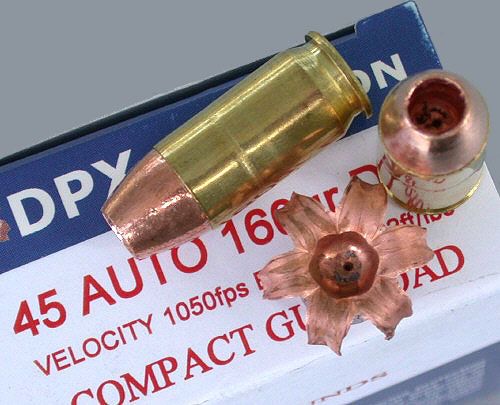
Expanding rounds are safer because the round generally deforms on contact with a surface, causing most of the round's kinetic energy to be imparted on first impact. Such rounds will often fall to the floor within short distance of the first surface. A FMJ round, on the other hand, can glance off a surface, or shatter, retaining a substantial portion of the kinetic energy it contained and affecting a larger area. This also includes rounds that may have penetrated through surfaces. These are often the most cited reasons for the use of HP rounds, all other things equal (lethality, etc.).
I disagree the bullet types have not made a difference in warfare, where a bullet matters.
Your point of "alternate" weapons is valid, but still a great number of casualties in "war" are small arms. I'd submit, many more are survivable, due to FMJ projectiles.
There
are reports that FMJ rounds have reduced lethality; however, these accounts of survivability are more in the context of bullets
under-performing when shooting targets, rather than as a benefit in terms of treating injuries. To combat this deficit, soldiers simply fire more rounds into a target, or utilize other lethal methods (e.g. grenades). Manufacturers have also found ways to increase lethality, for example by changing the weighting characteristics so that the bullet tumbles more easily in soft targets. There are even claims that at the time of the convention, the Germans--who brought up the issue of expanding bullets against the British .303 HP round--only did so for their own advantage as their own bullets were designed for extra tumble. Ironically, the FMJ replacement for the .303 HP bullet actually caused more tissue damage than the HP round because of such tumbling characteristics.
This is all on top of the fact that war has changed since the pre-WWI convention. Most of this is a moot point now that weapons have evolved in terms of lethality. Bullets are
both tissue damaging and penetrating, and it's easy enough to just riddle a body with more holes if necessary.






 If you double-tap, that may be questioned later. It's a sticky place to be. One person I like to hear from is Mas Ayoob: